While the massive golden fortress of Jaisalmer commands the city’s skyline, the true artistry of the “Golden City” is hidden within its narrow residential lanes. Among these, Patwon Ki Haveli stands as the grandest testament to the immense wealth, global influence, and architectural brilliance of medieval Rajasthan.
For travelers stepping into Jaisalmer, visiting this breathtaking mansion is like opening a beautifully carved chest of history. It tells the story of an era when desert merchants traded silk, spices, and opium across the ancient Silk Road, accumulating fortunes that rivaled the royalty of the time.
The History: A Palace Built by a Merchant Dynasty
Unlike the royal palaces commissioned by kings, Patwon Ki Haveli was built by an incredibly wealthy Jain merchant and broker, Guman Chand Patwa. Started in 1805, this massive project took nearly 50 years to complete, resulting in a spectacular cluster of five interconnected mansions built for his five sons.
The Patwa family traveled extensively across Central Asia, China, and Europe. This global exposure is beautifully reflected in the mansion’s design, which seamlessly blends traditional Rajput architecture with subtle Islamic and European artistic influences.
Architectural Brilliance in Yellow Sandstone
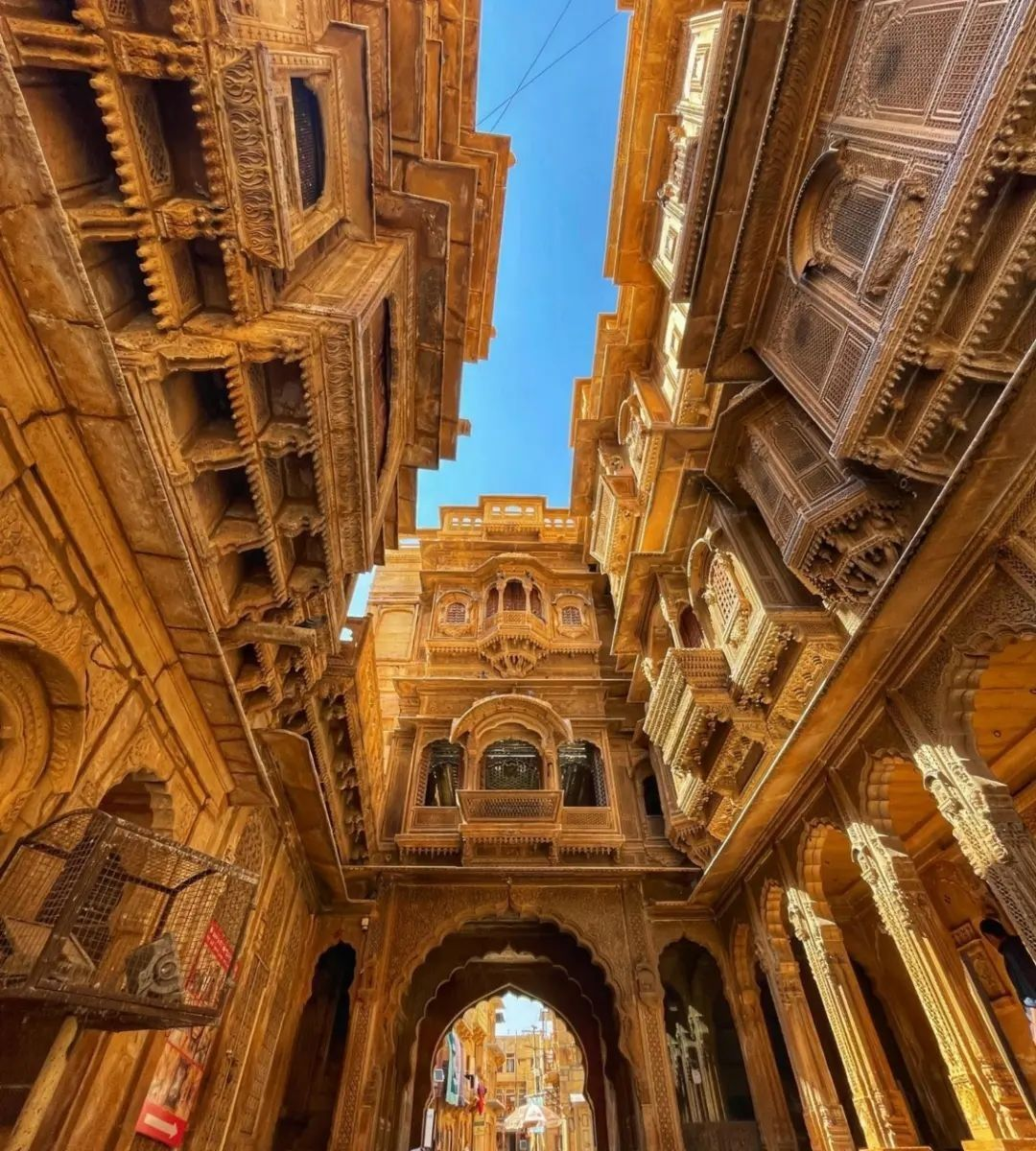
From the moment you turn the corner into the narrow alleyway leading to the haveli, the sheer scale of the building takes your breath away. Constructed entirely out of Jaisalmer’s signature yellow sandstone, the five-story structure appears to be woven out of delicate gold lace rather than chiseled out of solid rock.
Key Highlights to Observe Inside:
- The Jharokhas (Balconies): The facade features over 60 intricately carved jharokhas. Each balcony is uniquely chiseled with patterns of flora, fauna, and geometric lattices, designed to allow royal women to look at the street below without being seen.
- The Wall Paintings & Mirror Work: Step inside the grand rooms to find vibrant murals made with natural stone pigments, gold leaf work, and stunning Sheesh Mahal style mirror mosaics that catch the minimal desert light.
- Smart Ventilation Architecture: The haveli is a marvel of climate-responsive design. The clever placement of inner courtyards, narrow air shafts, and stone screens creates a natural draft that keeps the interiors remarkably cool, even during harsh desert summers.
Essential Visitor Guide
- Operating Hours: The haveli is open daily from 9:00 AM to 6:30 PM.
- Best Time to Visit: Arrive around 9:30 AM to explore the narrow stone rooms before the daytime heat picks up, or visit during the late afternoon when the setting sun turns the sandstone a deep, glowing amber.
- Photography Tip: Head to the open rooftop terrace. It offers an incredible, tight-angle frame of the neighboring Jaisalmer Fort rising over the city’s old stone roofs.
From Heritage Lanes to Pristine Dunes: Completing Your Journey
Spending a morning exploring the historic corridors of Patwon Ki Haveli introduces you to the sophisticated indoor lifestyle of Jaisalmer’s golden past. However, to experience the raw, untamed soul of this region, you must venture out beyond the city walls into the vast expanses of the Thar Desert.
After a day of exploring stone carvings, true desert exploration requires immersing yourself in the wild. To execute an unforgettable escape, it is essential to lock in a stay at the Best Desert Camps Jaisalmer can provide. Modern desert hospitality lets you transition from a historic merchant palace to an exceptionally spacious, premium Tent In Jaisalmer.
These permanent canvas suites are built on solid concrete foundations and feature plush king-sized beds, fine hand-printed textiles, and attached modern en-suite bathrooms with hot running water. They offer the ultimate peace, quiet, and isolation of the open dunes without forcing you to compromise on a single modern luxury.
The absolute highlight of a Jaisalmer holiday happens once the desert sun dips below the horizon. Because the open sand dunes have zero light pollution, the night sky transforms into a dazzling dome of millions of stars.
You can elevate your heritage trip by booking an exclusive, private Dinner on Dunes. Guided away from the main resort tracks to a secluded clearing among the sand ridges, you are welcomed by a crackling bonfire and the soft, warm glow of traditional oil lanterns.
As you relax on comfortable cushions laid directly on the cool sand, local Manganiyar folk musicians play soulful melodies while traditional dancers perform by the fireside. The evening is topped off with a lavish feast of authentic Rajasthani delicacies—including Dal Baati Churma, Ker Sangri, and slow-cooked Laal Maas—freshly prepared for you under the starry desert sky. It is a magical, unforgettable experience that perfectly bridges Jaisalmer’s royal heritage with its majestic natural wonders.