
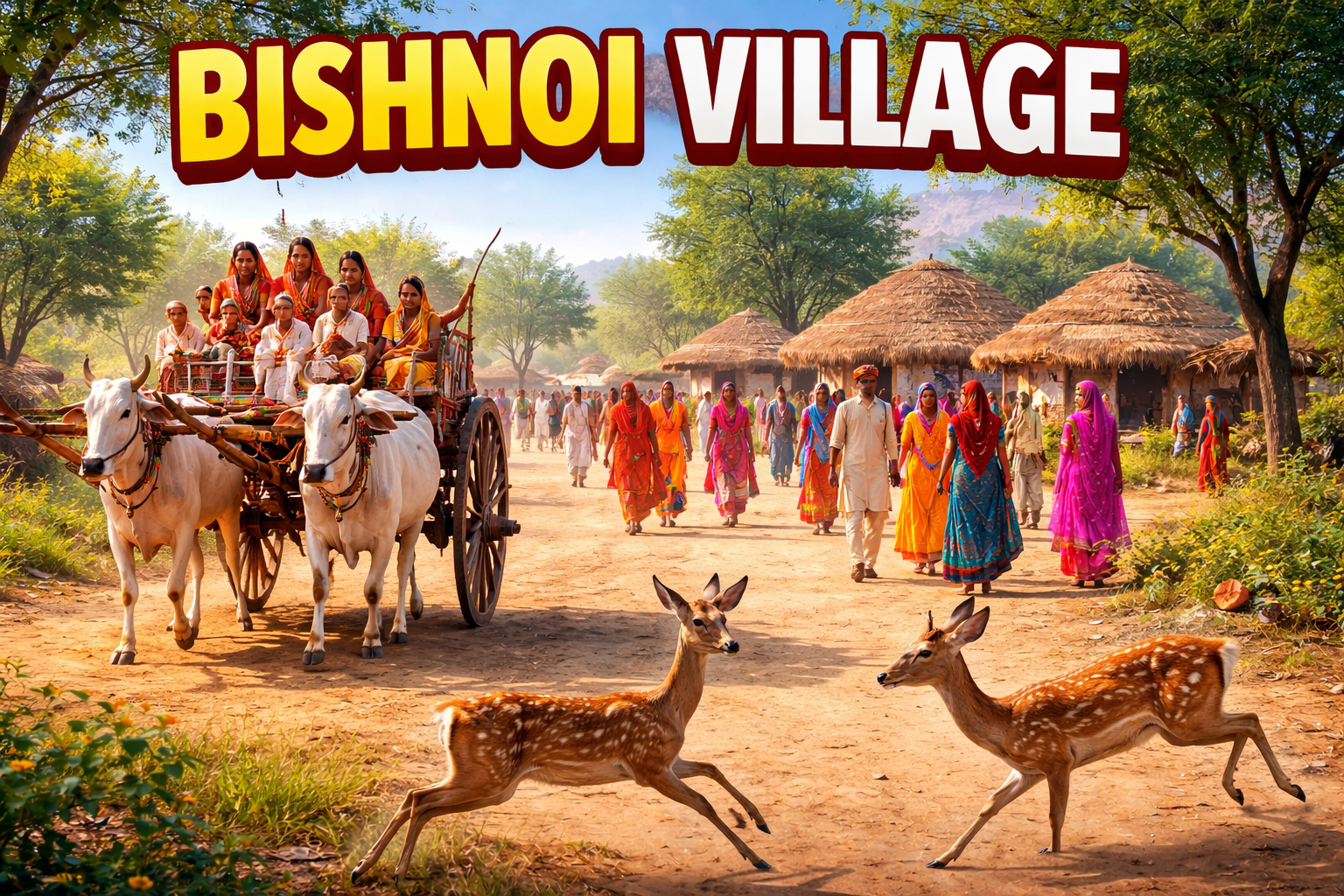
The Living Legacy of the Bishnoi Community
In a world increasingly grappling with environmental crises, the answer to sustainable living might not lie in future technology, but in ancient wisdom. Deep in the heart of the Thar Desert in Rajasthan, the Bishnoi community has practiced a radical form of nature conservation for over 500 years. A Bishnoi eco-tour is not just a sightseeing trip; it is an immersion into a lifestyle where the protection of trees and wildlife is considered a sacred duty, often valued above human life itself.
The philosophy of the Bishnoi people is rooted in the 29 principles (Shabads) laid down by Guru Jambheshwar in the 15th century. Of these tenets, a significant portion focuses on hygiene, health, and the absolute prohibition of killing animals or cutting green trees. This deep-seated devotion has transformed their villages into lush oases where blackbucks, chinkaras, and migratory birds roam without fear of hunters.+1
The Sacred Khejri Tree and the Origins of Chipko
The most famous testament to Bishnoi bravery is the story of the Khejri tree. In 1730, 363 Bishnois, led by a woman named Amrita Devi, sacrificed their lives to protect trees from being felled by the Maharaja’s men. This “Khejarli Massacre” became the spiritual inspiration for the modern-day Chipko movement. During an eco-tour, visitors can stand on this hallowed ground and realize that conservation here is not a modern trend—it is an ancestral inheritance.
The Khejri tree itself is a marvel of desert adaptation. It provides fodder for livestock, enriches the soil with nitrogen, and offers shade in 50°C heat. To the Bishnois, this tree is a personification of life. When you book a jodhpur to bishnoi village tour, you witness firsthand how a community thrives by treating nature as a family member rather than a resource to be exploited.+1
Wildlife Conservation as a Spiritual Practice
Unlike many wildlife sanctuaries where animals flee at the sight of humans, the Bishnoi villages offer a unique spectacle of harmony. Because the community has protected them for centuries, wild animals like the Indian Gazelle (Chinkara) often wander right into the courtyards of homes. Bishnoi women have even been known to breastfeed orphaned fawns, showcasing a level of empathy for the animal kingdom that is unparalleled globally.
Preserving this delicate ecosystem requires careful navigation through the desert terrain. To ensure a respectful and authentic experience, many travelers rely on a professional jodhpur taxi service to reach these remote settlements comfortably. Having a knowledgeable local driver from Jodhpur Taxi Safe Tour can bridge the gap between a standard tourist visit and a meaningful cultural exchange, as they understand the routes that lead to the most vibrant community hubs.
Sustainable Architecture and Ancient Water Wisdom
The architectural footprint of a Bishnoi village is a lesson in sustainability. Most traditional homes (Dhani) are circular huts with thatched roofs made of local desert grass. These structures are naturally climate-controlled, remaining cool during the blistering summer and warm during the cold desert nights. The walls are often plastered with a mix of clay and cow dung, which acts as a natural disinfectant.
Water management is another “secret” of the Bishnois. In a region where every drop is precious, they have mastered the art of rainwater harvesting through khadins and tankas. This ancient engineering ensures that even in years of low rainfall, the community and their livestock have enough to survive. Visitors can observe these systems and learn how minimal consumption can lead to a high quality of life.
The Opium Ceremony and Traditional Craftsmanship
An integral part of the Bishnoi social fabric is the ‘Amal Sabha’ or the traditional opium ceremony. Historically used for medicinal purposes and to welcome guests, this ritual is a communal gathering where elders discuss village affairs and resolve disputes. While the ceremony is symbolic today, it offers a glimpse into the social cohesion that makes their conservation efforts so successful.
Beyond rituals, the community is a hub for traditional arts. The Potters’ Village and the Weavers’ Village are essential stops on any eco-tour. Here, artisans use natural dyes and manual wheels to create intricate pottery and durries (rugs). Purchasing these goods directly supports the local economy and ensures that these eco-friendly crafts do not die out in the age of mass production.+2
Why the Bishnoi Model Matters Today
The Bishnoi way of life proves that humans do not have to be at odds with their environment. Their “secrets” are remarkably simple: take only what you need, protect those who cannot speak for themselves, and view the earth as a sacred trust. As global temperatures rise and biodiversity declines, the Bishnoi model offers a blueprint for how humanity might pivot back toward a balanced existence.
A journey to these villages is a transformative experience that stays with you long after you leave the desert sands. By choosing a responsible operator like Jodhpur Taxi Safe Tour, you contribute to a form of tourism that respects local traditions and promotes environmental awareness.