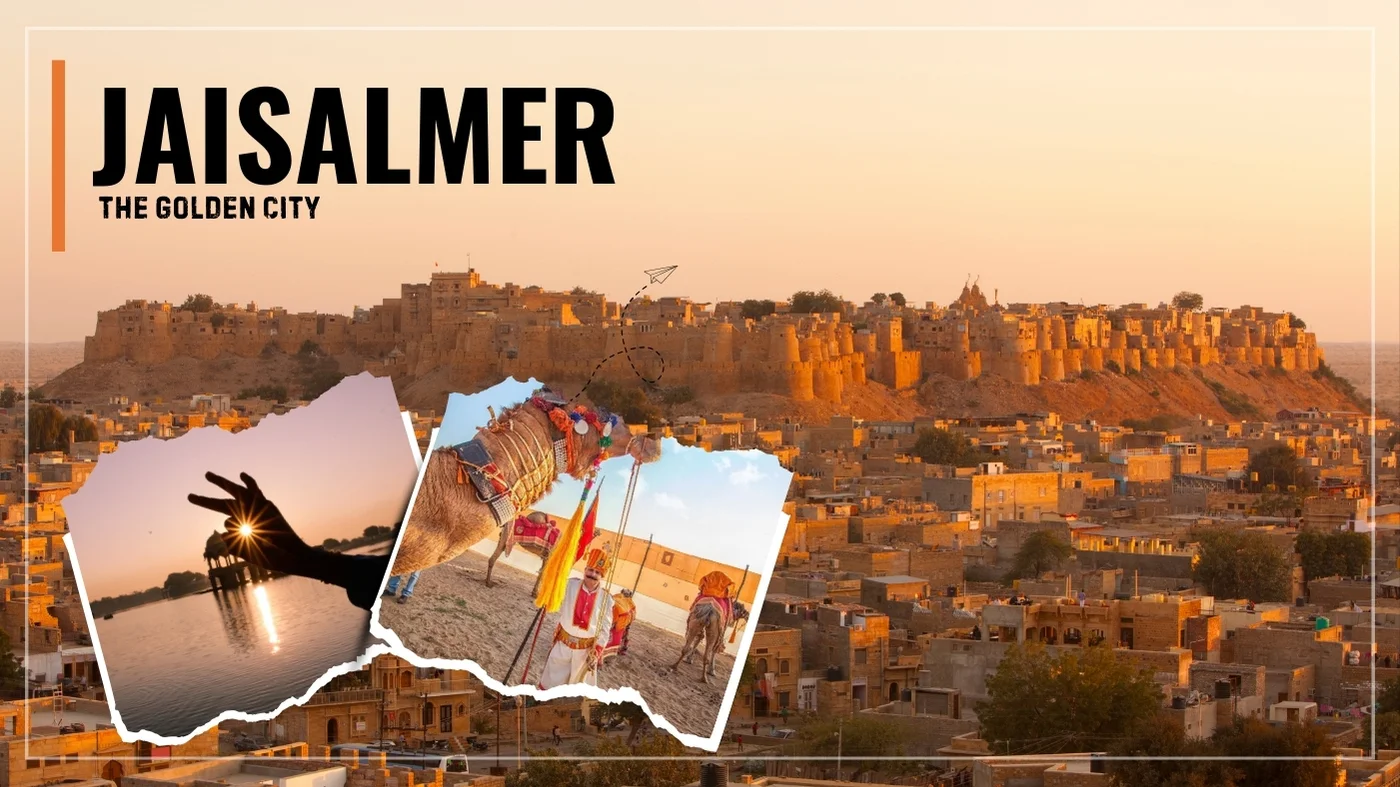

Exploring the heart of the Thar Desert often begins with finding a reliable Jaisalmer cab service to navigate the vast, sun-drenched landscapes of Rajasthan. While Jaisalmer captures the imagination with its golden sands, no journey through this royal province is complete without venturing toward the “Blue City” of Jodhpur. Towering over the city on a perpendicular cliff, Mehrangarh Fort stands as a testament to Rajput courage and architectural brilliance. Spanning over 500 years of history, this citadel is not just a monument but a living chronicle of the Rathore dynasty.
The Architectural Grandeur of Mehrangarh
Rising 410 feet above the city skyline, the fort’s walls are so imposing that Rudyard Kipling once described it as “the work of giants.” As you pass through the series of seven massive gates, including the famous Jai Pol and Fateh Pol, the transition from military grit to palatial elegance becomes evident. The intricate carvings on the sandstone lattices (Jalis) allow cool breezes to flow through the courtyards while maintaining the privacy of the royal inhabitants. Each gate has a story to tell, from marks of cannonballs to the symbolic palm prints of queens who performed sati, offering a somber yet profound glimpse into the fort’s storied past.
Palaces of Gold and Glass
Inside the fort lies a collection of palaces that redefine luxury. The Moti Mahal, or Pearl Palace, is one of the oldest and most beautiful rooms, where the royal family held court. Its walls are mixed with crushed seashells to create a luster that mimics the glow of a pearl. In contrast, the Sheesh Mahal (Hall of Mirrors) dazzles visitors with its intricate mirror work and religious figurines. Perhaps the most vibrant of all is the Phool Mahal, or Flower Palace, which served as a private chamber for royal entertainment. The gold leaf work on the ceilings and the stained-glass windows create a kaleidoscope of colors when the sun hits the sandstone at just the right angle.
The Mehrangarh Museum and Royal Artifacts
To truly appreciate the lifestyle of the Maharajas, a visit to the Mehrangarh Museum is essential. It houses one of the most well-preserved collections of palatial memorabilia in India. You will find an impressive array of palanquins (Palkis), including the ornate Mahadol palanquin won in a battle in 1730. The armory section is equally fascinating, showcasing weapons from various centuries, including the heavy swords of Rao Jodha and the gem-studded daggers of later rulers. This deep dive into history is a centerpiece for any Jodhpur sightseeing tour, providing context to the ruins and restorations seen throughout the region.
The Legend of the Cursed Citadel
Every great fort has a legend, and Mehrangarh is no exception. History tells us that to build the fort, Rao Jodha had to displace a hermit named Cheeria Nathji, the lord of birds. Angered by the intrusion, the hermit cursed the fort with a scarcity of water. To appease the gods and protect the kingdom, a man named Raja Ram Meghwal voluntarily allowed himself to be buried alive in the foundations—a sacrifice that is still honored with a plaque at the site. This blend of folklore and factual history adds a layer of mystique that few other Indian monuments can match.
Panoramic Views and the Blue City
One of the most photographed aspects of the fort is the view from the ramparts. Here, rows of ancient cannons, including the famous Kilkila cannon, still point toward the horizon. From this vantage point, you can see why Jodhpur is called the Blue City. The sea of indigo-colored houses creates a stunning contrast against the brown desert terrain. Observing the sunset from these heights, as the city lights begin to twinkle below, is a spiritual experience that stays with travelers long after they leave.
Planning Your Visit to the Fort
When preparing to explore Mehrangarh Fort Jodhpur history design, it is wise to dedicate at least three to four hours to cover the entire complex. The fort is accessible via an elevator for those who wish to skip the steep climb, though walking through the gates provides a much better sense of the fort’s defensive scale. Audio guides are available in multiple languages and are highly recommended for understanding the nuances of the architecture and the specific history of each courtyard.
Cultural Performances and Local Craft
The courtyards of Mehrangarh are often alive with the sounds of folk music. Local musicians, often descendants of those who played for the kings, perform traditional Rajasthani songs using instruments like the Sarangi and Khartal. Near the exit, the museum shop offers high-quality crafts, including traditional textiles and miniature paintings that reflect the artistic heritage of Marwar. Supporting these local artisans ensures that the cultural legacy of Jodhpur continues to thrive alongside its physical monuments.
Beyond the Walls: Rao Jodha Desert Rock Park
Adjacent to the fort is the Rao Jodha Desert Rock Park, a 72-hectare area created to restore the natural ecology of the rocky wasteland. Walking through the park’s trails offers a different perspective of the fort’s exterior, showcasing how the structure emerges naturally from the volcanic rock. It is an excellent spot for birdwatching and seeing the unique flora that survives in this arid environment, providing a peaceful conclusion to a day filled with royal history and architectural marvels.