
Introduction to Jaisalmer
Jaisalmer stands apart from most tourist destinations in India. Built in the heart of the Thar Desert, the city blends history, architecture, and desert life into one seamless experience. Golden sandstone structures rise from the sand, while daily life continues inside centuries-old walls. This tour guide focuses on what truly defines Jaisalmer: its forts, havelis, and the vast sand dunes that surround it.
For travelers who want more than rushed sightseeing, Jaisalmer offers depth, silence, and a strong sense of place.
Jaisalmer Fort: A Living Piece of History
Jaisalmer Fort is not just the city’s most famous attraction, it is its backbone. Unlike most forts that function only as monuments, this one is still home to families, temples, and local businesses. Built entirely of yellow sandstone, the fort glows throughout the day, earning Jaisalmer its Golden City identity.
Walking through the fort’s narrow lanes reveals everyday life unfolding inside historic walls. Jain temples display intricate carvings, while viewpoints offer sweeping views of the city and the desert beyond. Visiting early in the morning or near sunset allows you to experience the fort without heavy crowds.
Historic Havelis and Desert Architecture
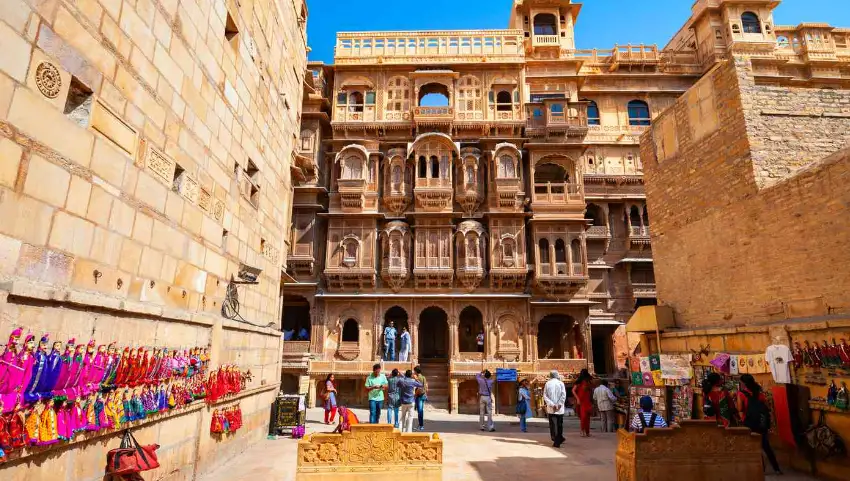
Beyond the fort, Jaisalmer’s havelis tell stories of wealth, trade, and craftsmanship. Patwon Ki Haveli, a cluster of five grand mansions, stands as the most impressive example. Its detailed stonework reflects the prosperity of merchant families who once controlled desert trade routes.
Salim Singh Ki Haveli adds contrast with its distinctive roof design and carved balconies. These havelis were not built for decoration alone. Their design helped manage heat and airflow, showing how architecture adapted to desert conditions long before modern technology.
Stepping Into the Thar Desert
To understand Jaisalmer fully, you must experience the desert itself. Staying at a Jaisalmer Desert Camp allows you to move beyond city boundaries and into open landscapes shaped only by wind and time. Desert camps are typically located near sand dunes, offering a quiet environment far from traffic and crowds.
Life at a desert camp moves slowly. Days are relaxed, and nights are calm, often accompanied by folk music and cultural performances that reflect traditions rooted in desert living. This setting helps travelers connect with the land rather than just observe it.
Exploring the Sand Dunes
The sand dunes around Jaisalmer are more than a scenic backdrop. They are constantly shifting, changing shape and color with light and wind. Sunrise and sunset are the best times to experience them, when the sand turns from pale gold to deep amber.
A Jeep Safari in Jaisalmer offers a dynamic way to explore these dunes. Guided by experienced drivers, the safari takes you across steep ridges and open desert stretches. The thrill of the ride is balanced by moments of stillness when you stop to take in the vastness around you.
Beyond adventure, jeep safaris also reveal how life exists in remote desert areas, from wildlife to isolated settlements.
Choosing the Right Desert Stay
Your accommodation shapes how you experience the desert. A Luxury Tent in Jaisalmer is ideal for travelers who want comfort without losing connection to nature. These tents usually feature spacious interiors, proper bedding, attached bathrooms, and décor inspired by local traditions.
For travelers who prefer simplicity, a Deluxe Tent in Jaisalmer provides essential comfort with a practical setup. Clean spaces, privacy, and functional amenities make these tents suitable for families and groups who want an authentic desert stay without unnecessary extras.
Both options allow you to rest properly after long days of exploration.
Dining in the Desert
Food in Jaisalmer reflects desert wisdom. Meals are designed to be filling and flavorful, using ingredients suited to a dry climate. While dining at camps is enjoyable, one experience stands out for its setting rather than its menu.
A Dinner on Dunes transforms dining into a moment. Set in the open desert under the night sky, surrounded by sand and silence, the experience feels intimate and timeless. Soft lighting and cool desert air create an atmosphere that no indoor restaurant can match.
Local Life and Cultural Experiences
Beyond monuments and dunes, Jaisalmer’s local life adds depth to the journey. Traditional clothing, folk music, and daily routines reflect generations of adaptation to desert living. Cultural performances often tell stories of migration, survival, and community.
Exploring local markets gives you access to handcrafted textiles, leather goods, jewelry, and puppets. These crafts represent skills passed down over centuries and offer meaningful souvenirs that support local artisans.
Best Time to Follow This Tour Guide
The best time to explore Jaisalmer is from October to March. During these months, temperatures are comfortable for sightseeing, desert stays, and outdoor activities. Summers can be extremely hot and limit exploration, especially in the desert.
Planning your visit during the cooler season allows you to experience forts, havelis, and sand dunes without physical strain.
Final Thoughts
Jaisalmer is not a destination meant to be rushed. Its forts and havelis reveal history, while its sand dunes and desert camps show how life continues in harmony with a challenging environment. When you explore both the city and the desert at a relaxed pace, the experience feels complete.