Jaisalmer can feel overwhelming if you’re visiting for the first time. The city looks compact, but attractions are spread across the old town, outskirts and deep into the desert. Add changing light, desert heat and tight sunset windows, and poor planning can cost you experiences you can’t get back. This guide is built to help first-time visitors understand what actually matters, what to skip, and how to move through Jaisalmer without stress. Many travelers choose to plan with a reliable Travel Agency in Jaisalmer to avoid common mistakes and get the pacing right.
Understanding Jaisalmer Before You Arrive
Jaisalmer isn’t a “do everything fast” destination. It’s a living desert city shaped by trade routes, water scarcity and time. The fort is alive, villages still function traditionally, and the desert sets the schedule. If you approach it like a checklist city, you’ll miss the point. First-time visitors do best when they slow down and follow a logical flow rather than cramming everything into one day.
Start with Jaisalmer Fort, Early
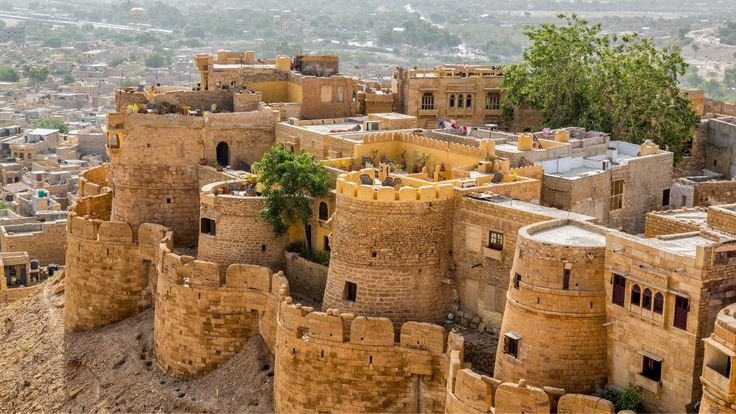
Your first stop should always be Jaisalmer Fort, also known as Sonar Quila. It’s one of the few living forts in the world, with families, temples, shops and cafés still operating inside. Visit early in the morning. This is when the fort feels real rather than crowded. You’ll see locals heading to temples, shopkeepers opening shutters and soft golden light hitting the sandstone.
Inside the fort, don’t rush. Walk the lanes, visit the Jain Temples and take in the city views from the upper levels. This single stop sets the context for everything else you’ll see in Jaisalmer.
Explore the Havelis Without Rushing
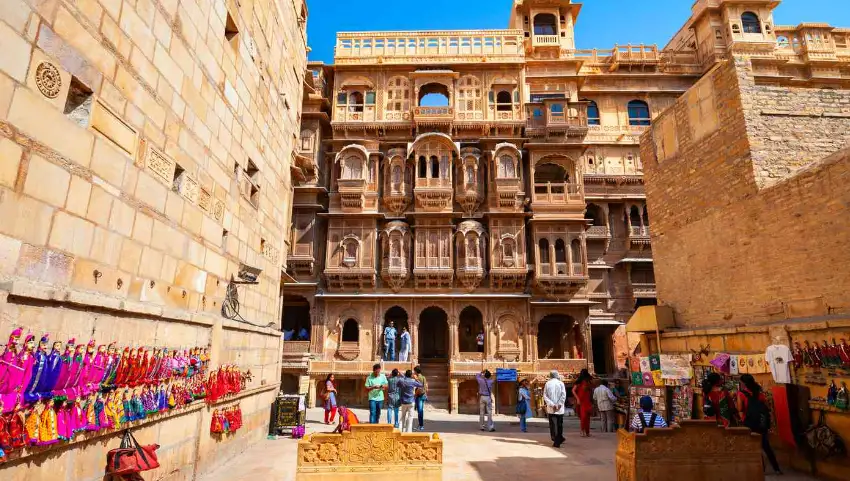
After the fort, move on to the havelis. Patwon Ki Haveli is the most detailed and should be your priority. Salim Singh Ki Haveli stands out for its peacock-shaped roof, while Nathmal Ki Haveli reflects artistic freedom through its carvings.
Most first-time visitors rush these places. Don’t. These buildings weren’t just decorative. Their design explains how people lived in extreme desert conditions. Take time to notice airflow patterns, balcony layouts and stonework details.
Take a Break at Gadisar Lake
Gadisar Lake is often treated as a quick photo stop, but it works best as a pause. Surrounded by temples and ghats, it shows how water shaped life in a desert city. Visit in the early morning or near sunset. Sit for a while instead of walking straight through. This break helps reset your pace before moving outside the city.
Plan Outer Attractions in One Route
Places like Kuldhara village, Bada Bagh and Amar Sagar are outside the city. Visiting them randomly wastes time. Combine them into a single route.
Kuldhara isn’t about ghost stories. It’s about migration, water failure and community collapse. Walk through it quietly.
Bada Bagh makes sense only in soft light. Early morning or late afternoon transforms it completely.
Managing this route becomes much easier with a dependable Jaisalmer Sightseeing Taxi because local drivers know the correct order and timing, which first-time visitors usually get wrong.
The Desert Is Not Optional
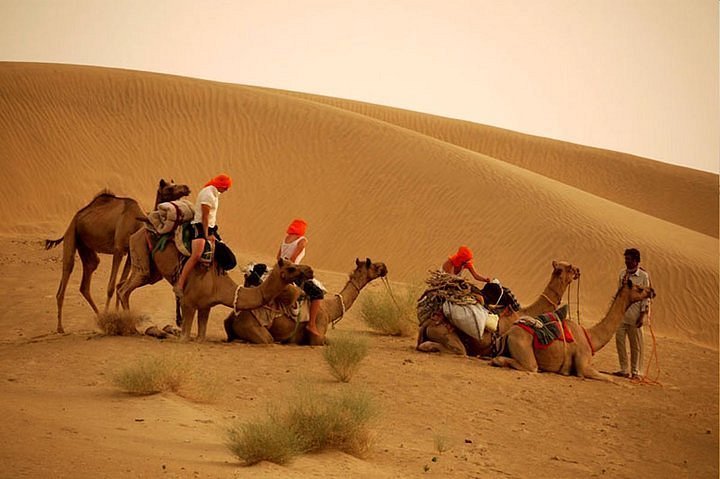
If this is your first visit, skipping the desert is a mistake. Sam Sand Dunes offer the classic Thar Desert experience. Camel safaris give you a slow, traditional feel. Jeep safaris are faster and more adventurous.
The key is timing. Reach the dunes at least an hour before sunset. Most people arrive late and miss the best light. Sunset isn’t just a view here, it’s the main event.
After sunset, desert camps host folk music, Kalbelia dance and traditional performances. Staying overnight lets you experience desert silence and stargazing, which many first-timers regret missing.
Food First-Time Visitors Should Actually Try
Yes, dal baati churma is essential, but don’t stop there. Ker sangri, gatte ki sabzi, bajre ki roti and local kadhi reflect real desert food, not tourist versions.
Try small dhaba-style places outside the fort area for the most authentic meals. Ghotua ladoo is Jaisalmer’s signature sweet and should be bought fresh from old city shops.
Shopping Without Getting Trapped
Sadar Bazaar and Pansari Bazaar are worth visiting, but don’t treat them like malls. Look for handcrafted items, not mass-produced souvenirs. Leather goods, embroidery and silver jewelry often come from families who’ve been doing the same craft for generations. Bargain politely, not aggressively.
Why Transport Matters More Than You Think
Jaisalmer looks small but isn’t. Distances add up quickly, and public transport is unreliable. Depending on random autos leads to delays and overcharging, especially for desert routes or early-morning starts.
Booking a reliable Taxi Service in Jaisalmer gives you control over your time. It lets you start early, return late and reach remote spots without stress. For first-time visitors, this often makes the difference between a relaxed trip and an exhausting one.
Best Time for First-Time Visitors
October to March is ideal. November to February offers the best balance for sightseeing and desert stays, though nights get cold. Summers are extremely hot and not suitable for full exploration unless you’re very heat-tolerant.
Common Mistakes First-Time Visitors Make
Trying to do everything in one day
Arriving late at the dunes
Skipping overnight desert stays
Visiting monuments at the wrong time of day
Underestimating distances
Avoid these, and your trip improves instantly.
A Simple First-Time Itinerary
Day 1: Jaisalmer Fort, Jain Temples, havelis, Gadisar Lake, local markets
Day 2: Kuldhara, Bada Bagh, travel to Sam Sand Dunes, safari and overnight camp
Day 3: Return from desert, food exploration, relaxed city walk and departure
Final Thoughts
Jaisalmer rewards travelers who respect its pace. As a first-time visitor, your goal shouldn’t be to see everything, but to see the right things at the right time. When planned thoughtfully, the city offers living history, deep culture and desert silence that stays with you long after the trip ends. Slow down, plan smart and let Jaisalmer unfold naturally.