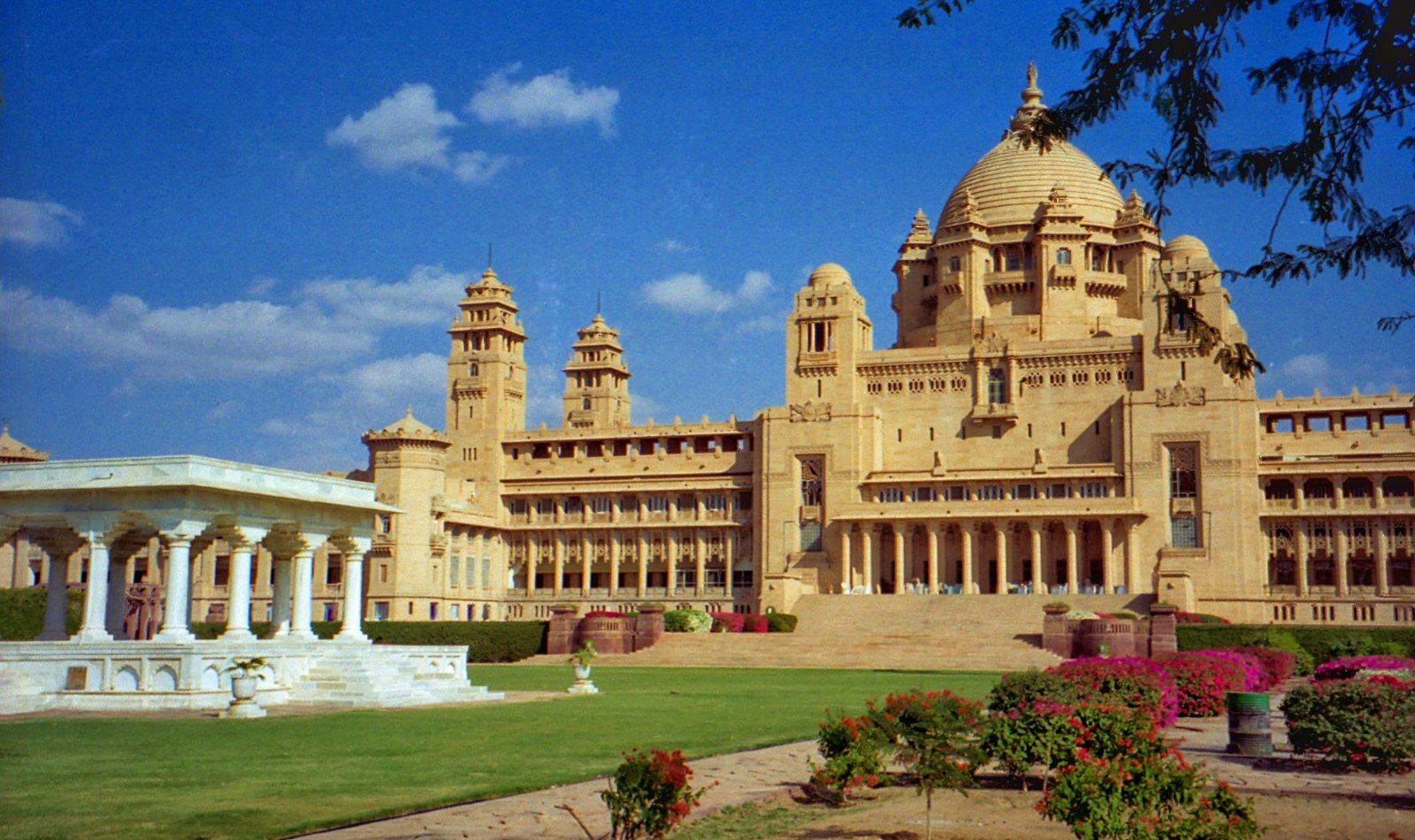
Stepping into the golden sandstone corridors of Umaid Bhawan Palace feels less like a typical museum visit and more like an immersion into a living legacy. As one of the world’s largest private residences, this architectural marvel serves as a bridge between the regal heritage of the Marwar dynasty and the modern luxury of the Taj Hotels. For those planning to navigate the “Blue City” with ease and comfort, choosing a reliable Jodhpur taxi service is the most practical way to arrive at the palace gates refreshed and ready to explore. The palace stands as a testament to the vision of Maharaja Umaid Singh, who commissioned the project not just as a royal home, but as a massive famine-relief project that provided employment to thousands of locals during a period of severe drought in the 1920s.
The Architectural Grandeur of Henry Lanchester
The design of Umaid Bhawan Palace is a sophisticated blend of Eastern and Western aesthetics. Often categorized as “Indo-Deco,” the structure combines the sleek lines of Art Deco—a style peaking in popularity during the 1930s—with traditional Rajput architectural elements like sprawling balconies, carved facades, and towering cupolas. The British architect Henry Lanchester sought to create a monument that reflected Jodhpur’s forward-thinking nature while respecting its roots. Using the same golden-yellow “Chitar” sandstone found in the surrounding desert, the palace glows with a warm radiance, particularly during the golden hour. The interior is equally breathtaking, featuring a massive 105-foot high central dome that is reminiscent of the Renaissance style, yet adorned with motifs that are quintessentially Indian.
Planning Your Jodhpur Sightseeing Tour
When organizing a comprehensive Jodhpur sightseeing tour, the palace usually serves as the centerpiece of the itinerary. Because the estate is divided into three functional parts—the royal residence, a luxury hotel, and a public museum—it offers something for every type of traveler. The museum is a treasure trove for history buffs, housing a fascinating collection of Victorian and Edwardian clocks, porcelain, royal memorabilia, and even an array of symbolic trophies. Visiting the palace requires a bit of time to truly soak in the atmosphere, so it is often recommended to pair it with a visit to the nearby Jaswant Thada or Mandore Gardens to see the full spectrum of Jodhpur’s royal history in a single day.
Navigating Jodhpur for Large Groups
Traveling with family or a large group of friends requires a different level of logistical planning, especially in the sun-drenched streets of Rajasthan. To ensure everyone stays together and enjoys the scenic drives without the hassle of multiple smaller vehicles, booking a tempo traveller in jodhpur is a highly efficient solution. These vehicles provide the necessary space for luggage and the air-conditioned comfort vital for surviving the Rajasthan heat. Whether you are arriving from the airport or heading out for a sunset dinner after exploring the palace, having a dedicated large-capacity vehicle ensures that the transition between locations is seamless and stress-free.
Inside the Museum: A Glimpse of Royal Life
The public museum within Umaid Bhawan Palace offers an intimate look at the private lives of the Rathore royals. One of the most striking exhibits is the collection of vintage cars parked in the front lush gardens. From classic Rolls Royces to Buicks and Cadillacs, these vehicles are maintained in pristine condition, reflecting the Maharaja’s love for engineering and luxury. Inside the galleries, visitors can view rare photographs of the royal family, intricate miniature paintings, and an impressive armory. The clock collection is particularly noteworthy, featuring timepieces shaped like windmills and lighthouses, showcasing the global influences that touched the lives of the Marwar rulers during the early 20th century.
The Enduring Legacy of the Marwar Dynasty
Umaid Bhawan Palace is not a relic of the past; it is a functioning heartbeat of Jodhpur. The current Maharaja, Gaj Singh, still resides in a wing of the palace, and the royal family continues to host significant cultural events that keep the traditions of the region alive. This continuity is what gives the palace its unique “E-E-A-T” value in the eyes of a traveler—it is an authentic experience backed by real history and ongoing cultural relevance. Unlike many other heritage sites that feel stagnant, the palace vibrates with the energy of a working estate. The meticulous maintenance of the grounds and the high level of hospitality provided by the hotel staff ensure that every visitor feels a bit of that royal magic.
Best Time to Visit and Travel Tips
To get the most out of your visit to Umaid Bhawan Palace, timing is everything. The winter months, from October to March, offer the most pleasant weather for walking through the outdoor galleries and gardens. The palace museum is generally open from 9:00 AM to 5:00 PM, and it is wise to arrive early to beat the midday crowds. Since the palace is situated on Chittar Hill, it offers a panoramic view of the entire city, including the Mehrangarh Fort in the distance. This vantage point provides an excellent opportunity for photography, as the blue-painted houses of the old city contrast beautifully with the desert landscape.
A Sustainable and Meaningful Landmark
Beyond its beauty, Umaid Bhawan Palace represents a significant moment in Jodhpur’s social history. By commissioning the construction as a relief measure, Maharaja Umaid Singh demonstrated a form of compassionate leadership that is still discussed today. The project took over 15 years to complete, involving thousands of artisans and laborers. This story of resilience and community support adds a layer of depth to the visitor experience. When you stand before the massive structure, you aren’t just looking at stone and mortar; you are looking at a monument born out of a desire to protect and provide for a kingdom.