The searing heat of the Rajasthan desert might deter the average tourist, but for the seasoned lensman, the dry season represents the pinnacle of feline photography. Finding a luxury resort in Ranthambore becomes the strategic base for those looking to document the raw, unfiltered life of the Royal Bengal Tiger. While the temperatures soar, the thinning vegetation and receding water sources create a dramatic stage where the predator-prey dynamic is stripped of its leafy camouflage, offering a clarity of sight that is simply impossible during the lush monsoon or the misty winter months.
The Magic of Golden Hour and Harsh Light Play
Summertime in Ranthambore National Park offers a unique lighting palette. While many photographers fear the overhead midday sun, the early morning and late evening “golden hours” are extended and intensified by the dust particles in the arid air. This creates a soft, ethereal glow that illuminates the amber coat of a tiger with breathtaking saturation. Expert photographers use this time to capture “rim lighting” effects, where the sun silhouettes the tiger against the parched earth, highlighting every whisker and muscle fiber. Even the harsh midday sun is utilized by professionals to capture high-contrast black-and-white shots, emphasizing the rugged textures of the Dhok trees and the cracked lake beds.
Unparalleled Visibility in the Dry Deciduous Forest
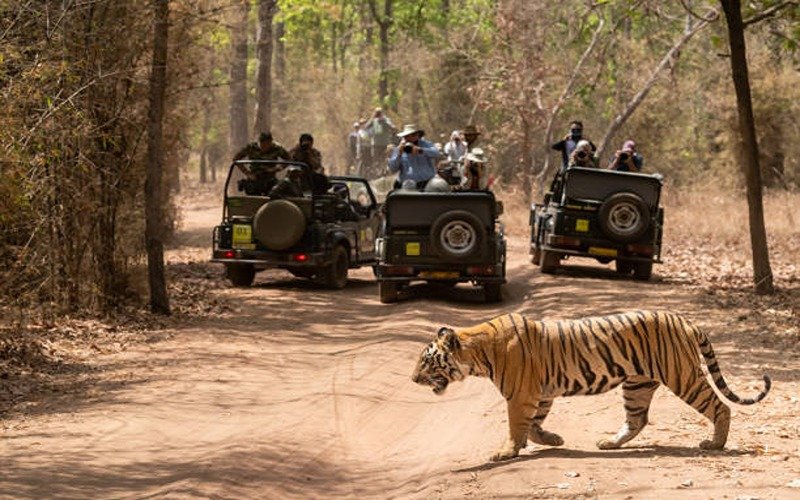
One of the primary reasons experts consider this the Best Time to Visit Ranthambore for photography is the drastic change in the landscape. Ranthambore is primarily a dry deciduous forest. By the time April and May arrive, the thick undergrowth that provides cover for tigers during the winter has withered away. The forest floor is carpeted in fallen leaves, making the orange and black stripes of the tiger stand out vividly against the pale, sandy backdrop. For a photographer, this means fewer branches obstructing the shot and a much higher chance of capturing a full-body walking shot of a tiger on the hunt or patrolling its territory.
Dramatic Action at the Shrinking Water Holes
In the peak of summer, water is the ultimate director of wildlife movement. As smaller puddles evaporate, the park’s inhabitants are forced to congregate around permanent water bodies like Padam Talao, Raj Bagh, and Malik Talao. This predictability is a photographer’s greatest asset. You aren’t just looking for a tiger; you are waiting for the inevitable moment it comes to drink or cool down. These water-hole sightings often lead to spectacular “action shots”—tigers soaking in the water with lilies around them, or the explosive tension of a predator lunging at a thirsty sambar deer. The reflection of a tiger in the still, blue water of the lakes is a bucket-list shot for every wildlife enthusiast.
Navigating the Zones for the Perfect Frame
The choice of vehicle can significantly impact the stability and angle of your equipment. For those traveling in larger groups or seeking a higher vantage point to look over tall grass near the water’s edge, a Canter Safari in Ranthambore provides a sturdy platform. The elevated seating allows photographers to shoot downwards into the valleys and lake beds, often providing a better perspective on a tiger resting in a shaded grove. Furthermore, the communal experience of a canter often means more eyes on the forest, increasing the chances of spotting a leopard or a sloth bear tucked away in a rocky crevice.
Capturing the Biodiversity Beyond the Big Cats
While the tiger is the undisputed protagonist, the Ranthambore summer highlights the park’s incredible biodiversity. The lack of foliage makes it an excellent time for bird photography. Crested serpent eagles, painted storks, and kingfishers are frequently seen around the lakes, their vibrant colors contrasting sharply with the monochromatic summer forest. The heat also brings out the reptiles; mugger crocodiles are often seen basking on the shores of the lakes, providing excellent opportunities for close-up texture shots of their prehistoric scales.
Survival of the Fittest Through the Lens
The summer narrative is one of resilience. Documenting a mother tigress protecting her cubs from the heat or a parched leopard venturing out of the hills for a drink adds a layer of “Experience” and “Trustworthiness” to a photographer’s portfolio. It shows a deep understanding of the animal’s behavior and the ecosystem’s cycles. The dust kicked up by the wind adds a sense of atmosphere and movement to the frames, telling a story of a land that is as harsh as it is beautiful.
Practical Tips for Summer Photography
To endure the 40°C+ temperatures, photographers must be as prepared as their equipment. Protecting gear from the fine desert dust is paramount; using lens sleeves and cleaning kits between drives is essential. Staying hydrated and choosing a stay that offers cooling comfort after a long day in the sun is equally important. The contrast between the rugged, sun-baked trails of the park and the serene environment of a local resort allows photographers to recharge their own batteries alongside their cameras.
Conclusion
Ranthambore in the summer is not for the faint of heart, but for those who live for the perfect shot, it is a paradise found. The combination of clear sightlines, predictable animal behavior at water sources, and the sheer intensity of the desert light creates a world-class photography experience. It is a time when the forest reveals its secrets most openly, rewarding the patient and the heat-brave with images that resonate with the raw power of the Indian wilderness.