Jawai is universally renowned for wild predators prowling undulating granite kopjes, but its true soul thrives inside rustic hamlets nestled beneath these ancient formations. A journey into the rural terrain surrounding Jawai Bandh reveals an ancient pastoral way of life defined by warmth, spirituality, and a rare coexistence between apex hunters and humans. For travelers seeking authenticity beyond generic tourist trails, stepping into the rustic rhythm of Pali district delivers genuine insight into living Rajasthani traditions.
Walk Alongside the Nomadic Rabari Tribe
The Rabari—frequently referred to as the Raika—are the pastoral custodians of the Marwar wilderness. Living as camel and sheep pastoralists for generations, their identity is intertwined with the seasonal pulses of the semi-arid landscape.
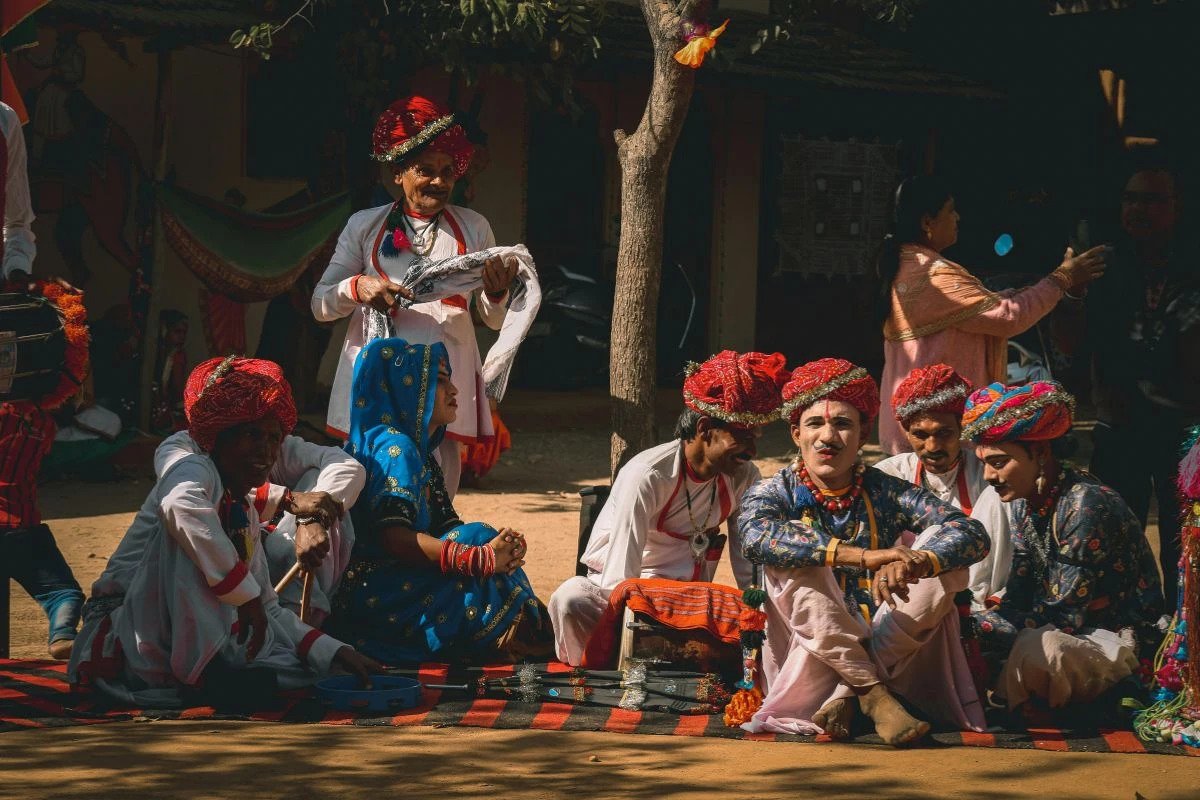
Interacting with the Rabari community starts with a respectful guided morning walk through villages like Sena, Bera, or Perwa. The men stand out in pristine white tunics, scarlet turbans (pagris), and intricate silver ornamentation, while the women wear dark, heavily embroidered garments accented with traditional bone bangles running up their forearms.
Spending time listening to village elders around a charpai provides a rare perspective on wildlife conservation. Unlike other pastoral societies that clash violently with carnivores, the Rabari view leopards as sacred companions protected by the local deity, Dev Narayan. If a leopard hunts a stray sheep or goat, herders often accept it without vengeance, considering it a natural tithe to the gods. Taking a dawn pastoral walk alongside their grazing herds illustrates this peaceful coexistence far better than any textbook could explain.
Discover Heritage Folk Crafts and Artisanal Needlework
Inside the mud-plastered courtyards of pastoral settlements, rural artistic expression remains a daily ritual rather than an industrial enterprise. Rabari women create hand-stitched textiles rich in mirror work, chain-stitch detailing, and symbolic geometric patterns passed down from mothers to daughters.
Visitors can witness this heritage firsthand:
- Intricate patchworking and quilting using leftover swatches of indigo and madder-dyed cotton fabrics.
- Clay pottery shaped on primitive hand wheels, utilized to cool drinking water through evaporation during scorching summer months.
- Hand-forged brass and iron bells crafted to hang from the necks of leading goats and camels.
Engaging with local artisans gives travelers a direct route to purchasing authentic handmade pieces without middleman markups. Supporting these micro-economies directly sustains tribal artisan lineages in a rapidly industrializing economy.
Savor Homestyle Delicacies and Rustic Village Cuisine
Experiencing rural culture requires sitting down to a meal cooked over a slow-burning wood fire (chulha). Desert cuisine in western Rajasthan developed out of resourcefulness, emphasizing hearty millet, sun-dried wild legumes, and rich dairy instead of water-intensive fresh produce.
Traditional rural feasts commonly include:
- Bajra Roti: Thick, coarse pearl millet flatbreads cooked directly on earthen griddles, smeared generously with fresh white butter (makkhan).
- Ker Sangri: A tart preparation made from dried wild capers and desert bean pods harvested from the hardy Khejri tree.
- Lahsun Ki Chutney: A piquant paste of pounded garlic, dry red chillies, and mustard oil pounded on a flat stone pestle (silbatta).
- Fresh buttermilk (chaas) tempered with roasted cumin, consumed by farmers to endure blazing afternoons.
Sitting in a village courtyard while listening to regional songs accompanied by the strum of a ravanhatta provides a grounding culinary memory that high-end urban restaurants cannot reproduce.
Witness Sacred Hilltop Rituals at Cave Shrines
Religion in this granite wilderness is raw, primal, and intimately tied to nature. Ancient shrines dedicated to Chamunda Devi, Ambe Mata, and local pastoral folk heroes sit perched directly within the hollow granite caves of the hills.
Climbing these rocky outcrops at dusk with a knowledgeable native guide unveils how spirituality and wild ecology cross paths. Priests and villagers hike barefoot up steep rock faces daily to beat temple bells and light brass lamps inside caverns where wild cats take shelter just feet away. Experiencing the resonant evening aarti echoing across granite cliffs while the surrounding wilderness turns golden under the setting sun is a deeply moving experience.
Balance Wildlife Exploration with Rural Heritage
A comprehensive journey to Pali requires combining wild tracking with authentic cultural immersion. Setting out across craggy hills in an open 4×4 for a Jawai leopard safari lets travelers appreciate how human habitats and untamed beasts overlap. Seeing a leopard sunbathe casually atop a granite boulder just a few hundred yards from a Rabari homestead grounds the entire cultural narrative into vivid reality.
After full days exploring dusty village trails, retreating to a peaceful haven completes the journey. Staying at a boutique resort in Jawai like The Jawai Sagar offers thoughtful comfort overlooking the tranquil backwaters of Jawai Dam. Located strategically near rural communities, the retreat serves as an ideal base for booking village immersions, exploring granite landscapes, and absorbing timeless rural heritage at an unhurried pace.