A journey through Rajasthan reveals dramatic transitions between imperial majesty and spiritual stillness. Combining Jaipur, the historic capital of the Kachwaha Rajputs, with Pushkar, one of the oldest sacred pilgrimage hubs in India, creates an exceptional route for travelers seeking both royal architecture and deep cultural heritage. As an established, certified travel agency in Rajasthan with over four decades of ground operations across the state, Rajasthan Yatra has crafted this comprehensive sightseeing circuit to help you experience the very best of both destinations efficiently and comfortably.
Planning the Sightseeing Circuit
The route begins in Jaipur, located roughly 270 kilometers southwest of New Delhi, and continues westward toward Pushkar in the Ajmer district. The distance between Jaipur and Pushkar spans approximately 145 kilometers, taking roughly three hours via the National Highway 48. This proximity allows for smooth transitions, whether you prefer an extensive multi-day package or a swift, concentrated Jaipur with Pushkar say tour designed for weekend travelers.
Jaipur Exploration: The Royal Heritage Circuit
Jaipur presents an architectural grid designed according to ancient Vastu Shastra principles. To cover its extensive monuments without enduring midday heat and crowd congestion, begin your day early. Travelers opting for a curated Jaipur full day tour can comfortably complete this entire urban heritage loop with private transport and an approved heritage guide.
Morning Architectural Wonders
The exploration starts at the Amber Fort, perched along the rugged Aravalli ridge above Maota Lake. Arrive by 8:30 AM to ascend the stone paths toward the Suraj Pol (Sun Gate) before the tourist buses arrive. Inside, explore the Diwan-e-Aam, the manicured Mughal-style Aram Bagh, and the Sheesh Mahal (Mirror Palace), known for its intricate convex glass inlays. On the return drive toward the walled city, stop by the viewpoint at Jal Mahal, the floating red sandstone palace resting in the center of Man Sagar Lake.
Afternoon Monument Complex
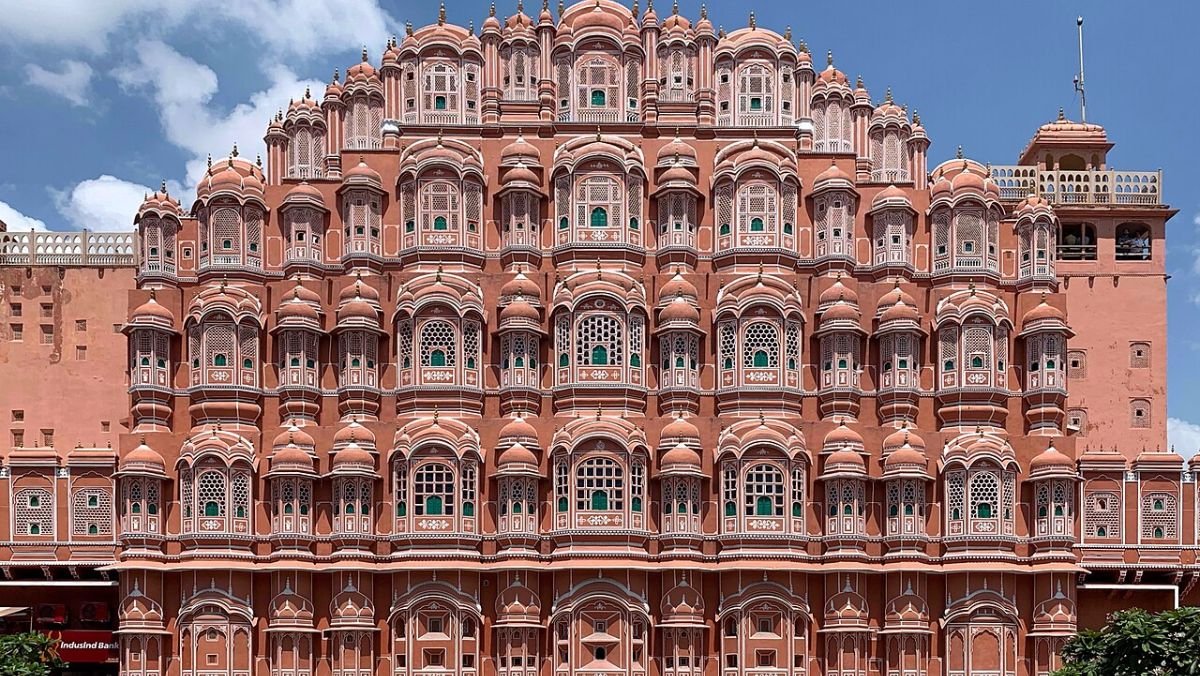
Continue into the historic heart of the Pink City. The five-story facade of Hawa Mahal, built in 1799, features 953 jharokhas (stone casements) originally designed to allow royal court ladies to witness street festivals unobserved. Directly behind it lies the City Palace complex, which continues to serve as the residence of the erstwhile royal family alongside housing extensive museum wings. Conclude the core heritage circuit across the road at Jantar Mantar, the UNESCO World Heritage astronomical observatory commissioned by Maharaja Sawai Jai Singh II, housing the massive stone sundial known as the Vrihat Samrat Yantra.
Transit to Pushkar: Crossing the Aravalli Hills
Leaving Jaipur after breakfast on the following morning, the highway cuts through dry deciduous forests, marble shipping yards near Kishangarh, and the winding hill pass overlooking Ajmer. While travelers can make a brief spiritual detour to the revered Sufi shrine of Dargah Sharif in Ajmer, heading straight up the winding mountain road leads quickly into the tranquil, whitewashed town of Pushkar.
Pushkar Exploration: The Sacred Oasis
Pushkar provides an intimate contrast to Jaipur’s expansive boulevards. As one of the five sacred dhams revered by devotees, it enforces a pure vegetarian and alcohol-free tradition throughout the municipal limits, preserving its quiet spiritual cadence.
Sacred Ghats and Pushkar Lake
Pushkar Lake is wrapped by fifty-two bathing ghats. Brahma Ghat and Varaha Ghat serve as the primary centers for morning and twilight rituals, where holy chants mingle with the ringing of brass bells. Walk the stone steps quietly, and observe standard cultural decorum: remove shoes before stepping onto the ghats and respectfully decline unrequested religious blessings offered by independent touts.
The Jagatpita Brahma Temple
Just steps from the main market lane stands the Jagatpita Brahma Temple, dating to the fourteenth century on foundations believed to be millennia old. Identified by its distinct red spire (shikhara) and silver coin-embedded floors, it stands as one of the few functional Brahma temples in the world. Morning visits allow for serene darshan before daytime visitor traffic peaks.
Savitri Devi Temple Viewpoint
To witness the geographical layout of the oasis, take the passenger ropeway or ascend the one-thousand stone steps to the summit of Ratnagiri Hill, where the Savitri Devi Temple sits. The vantage point affords a panoramic perspective across Pushkar Lake, the town’s flat rooftops, and the sweeping sand dunes that extend toward the Thar Desert.
Local Bazaars and Cultural Insights
Both destinations offer vibrant local markets that reflect authentic regional craftsmanship. In Jaipur, the lanes of Johari Bazaar and Bapu Bazaar provide access to authentic hand block-printed textiles, blue pottery, and lac bangles. In Pushkar, the market streets branching off Sadar Bazaar feature rose-water essences, pure gulkand, handmade leather diaries, and silver tribal jewelry. When shopping in traditional markets, respectful bargaining is customary, though fixed-price cooperative stores offer reliable quality verification for fine textiles and precious stones.
Practical Route Advice for Travelers
The best period to undertake this route runs from October through March, when daytime temperatures remain pleasant and outdoor walking is comfortable. Carry light cotton attire with modest coverage suitable for temple entry, wear sturdy walking shoes for fort cobblestones and temple stairs, and always keep local currency for heritage entry tickets and street market transactions. Planning ahead ensures an authentic, safe, and deeply enriching journey across Rajasthan’s historic heartland.