Planning a memorable desert getaway in Rajasthan requires more than just a list of monuments; it requires a well-paced itinerary that respects distances, desert temperatures, and local heritage. At Atithi Cabs, we have spent years guiding travelers across Rajasthan, refining a route that connects royal sandstone architecture with the quiet expanse of the Thar Desert. Whether you are starting your journey from the City of Lakes by booking a taxi in Udaipur or arriving directly in the Golden City, following an optimized sightseeing circuit transforms a rushed checklist into an immersive cultural experience.
Why Route Planning Matters in the Golden City
Jaisalmer is geographically split between its dense, historic walled core and vast desert attractions located 40 to 120 kilometers away. Without logical sequencing, travelers often waste hours backtracking through narrow lanes or arriving at the sand dunes after sunset. A structured itinerary groups inner-city heritage sites during the cooler morning hours and reserves the afternoon drive for outlying desert landmarks.
- Logical Geographical Clustering: Pairing monuments within a two-kilometer radius minimizes traffic delays and parking hassles near the fort gates.
- Temperature Management: Exploring open sandstone courtyards before noon avoids peak desert heat, even during the popular October-to-March travel window.
- Seamless Sunset Timing: Departing the city by mid-afternoon guarantees arrival at the dunes with ample time for camel safaris before dusk.
Morning Heritage Circuit: Inside the Walled City
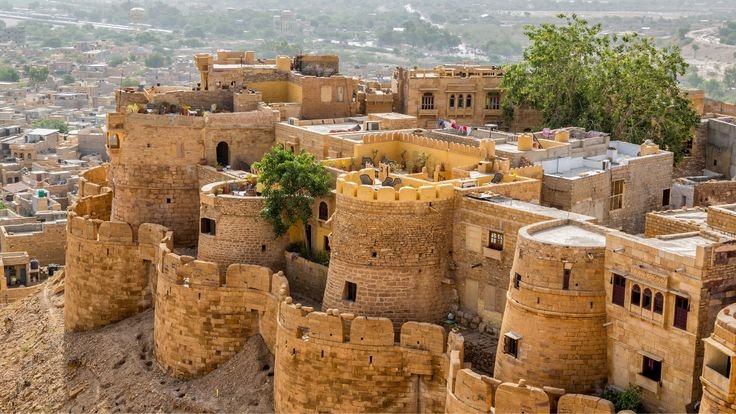
The ideal sightseeing route begins at 9:00 AM at Sonar Quila, the iconic Jaisalmer Fort. Unlike museum forts elsewhere in India, this UNESCO World Heritage Site remains a living fortress where thousands of residents live, work, and maintain ancestral shops within 99 yellow sandstone bastions. Starting early allows you to walk the ramparts and visit the intricately carved 12th-century Jain Temples before tour groups crowd the narrow alleys.
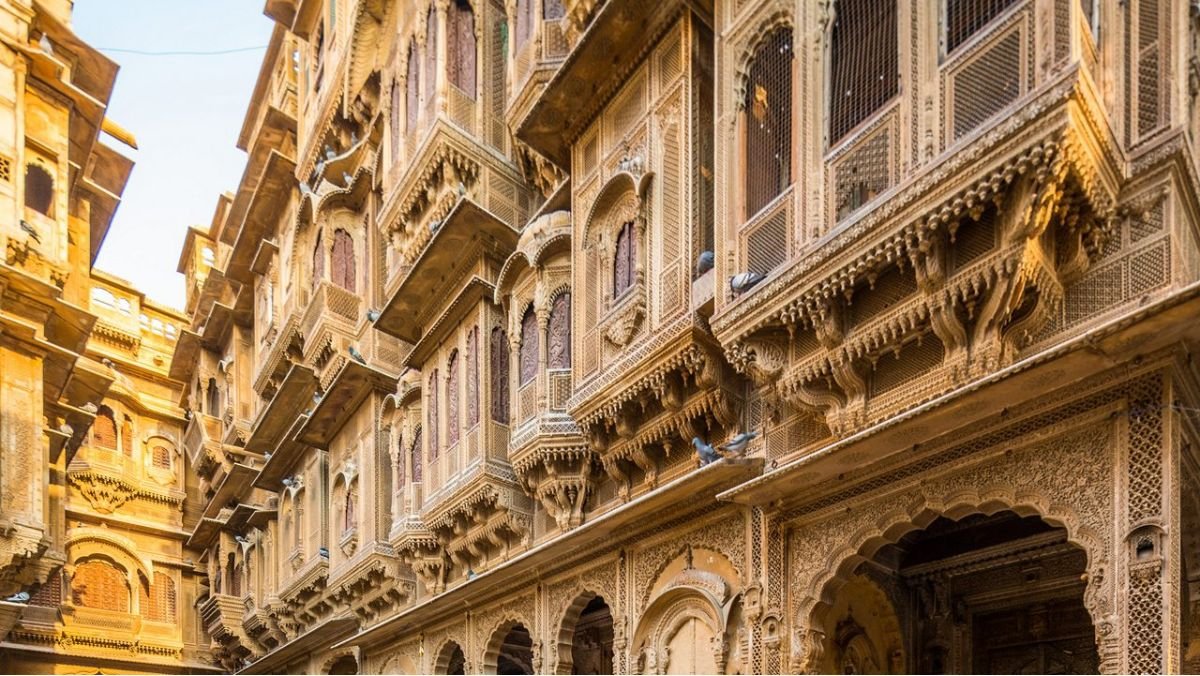
From the fort’s main gate, a short transfer brings you to Patwon Ki Haveli, a cluster of five interconnected mansions built by a wealthy merchant family in the 19th century. Its latticework balconies and mirror-inlaid interiors represent the pinnacle of Rajasthani stone carving. Just five minutes away stand Salim Singh Ki Haveli, famous for its peacock-shaped roof, and Nathmal Ki Haveli, celebrated for its asymmetrical facades carved independently by two brothers.
Midday Serenity at Gadisar Lake
Before leaving the city center for the desert, this route includes a refreshing stop at Gadisar Lake. Constructed in the 14th century by Maharawal Gadsi Singh as the city’s primary water reservoir, this man-made oasis is framed by carved sandstone chhatris, shrines, and the historic Tilon Ki Pol gateway. Spending forty-five minutes along the ghats offers peaceful photography opportunities and a calm transition between bustling heritage bazaars and the open wilderness.
Afternoon Desert Trail: Kuldhara to Sam Sand Dunes
By 3:00 PM, the route heads west toward the Thar Desert. Rather than driving straight to the dunes, experienced local drivers make an en-route stop at Kuldhara Village. Abandoned overnight in the 19th century by the Paliwal Brahmin community, this preserved ghost village offers fascinating architectural ruins and stark desert landscapes that add historical depth to your afternoon drive.
Continuing onward brings you to the Sam Sand Dunes, located roughly 45 kilometers from Jaisalmer city. Arriving around 4:30 PM gives you enough time to enjoy a traditional camel ride or a 4×4 jeep safari across the rolling golden ridges. As the sun dips below the horizon, the sand shifts from bright gold to deep amber, followed by folk music, Kalbeliya dance performances, and authentic Rajasthani hospitality at surrounding desert camps.
Choosing the Right Vehicle for Your Group
Navigating both tight heritage drop-off zones and long desert highways requires reliable transport backed by verified local drivers. Solo travelers, couples, and small families typically prefer booking a dedicated Jaisalmer sightseeing taxi service in an air-conditioned sedan or SUV, allowing complete flexibility to linger at favorite viewpoints without waiting on fixed bus schedules.
For larger families, wedding guests, or corporate groups traveling together, splitting across multiple small cars often leads to coordination delays at busy monuments. In such cases, choosing to hire tempo traveller in Jaisalmer keeps everyone in one spacious, pushback-seat cabin with generous luggage storage and unified itinerary timing.
Practical Travel Tips from Our Local Drivers
- Carry Small Cash Denominations: Monument camera fees, local guide tips, and refreshments near Kuldhara often require cash where mobile networks weaken.
- Pack Layers for Winter Evenings: Between November and February, sunny afternoons quickly turn into chilly desert nights once the sun sets over the dunes.
- Wear Comfortable Walking Footwear: Steep stone staircases inside the havelis and uneven fort cobblestones demand sturdy, closed-toe shoes.
With transparent per-kilometer pricing, sanitized vehicles, and drivers who know every shortcut and sunset viewpoint, Atithi Cabs ensures your Jaisalmer sightseeing tour runs smoothly from morning fort bells to starlit desert skies.