Planning a trip across Rajasthan often feels overwhelming because the state is vast, and trying to cram too many cities into a single schedule usually leads to exhaustion. However, pairing the royal heritage of the Pink City with the spiritual calm of Pushkar offers an ideal balance of architecture, local culture, and scenic road travel. Having spent over a decade guiding travelers along the NH-48 corridor, our team at Rajasthan Yatra has refined a seamless route that eliminates backtracking and maximizes your time at every landmark. Whether you are a first-time visitor or a returning traveler looking for deeper cultural immersion, choosing a trusted tour operator in Rajasthan ensures that every permit, local guide, and highway transfer runs smoothly without hidden surprises.
Why Combine Jaipur and Pushkar in One Journey
Geographically and culturally, Jaipur and Pushkar complement each other remarkably well. Jaipur showcases the grandeur of Rajputana royal palaces, astronomical observatories, and bustling walled-city bazaars. Just 145 kilometers southwest—roughly a two-and-a-half to three-hour drive via Kishangarh and Ajmer—Pushkar welcomes you into a tranquil temple town nestled beside a sacred lake and surrounded by the Aravalli hills. Because the highway connection is smooth and direct, you do not waste precious vacation hours on exhausting overnight journeys. Instead, you experience two distinct sides of Rajasthan within a compact three-to-four-day window.
Day 1: Exploring the Royal Heritage of Jaipur
Your journey begins in Jaipur with an early morning start to beat both the midday heat and the tour bus crowds. Arrive at Amer Fort by 8:00 AM to walk through the Diwan-i-Aam, Sheesh Mahal, and Ganesh Pol while the morning sunlight illuminates the sandstone walls. On your way back toward the walled city, pause at the lakeside promenade opposite Jal Mahal for photographs of the palace floating on Man Sagar Lake.
Spend your afternoon inside the historic Pink City core. Start at the City Palace museum complex to examine royal textiles and armory before walking next door to Jantar Mantar, the UNESCO-listed astronomical observatory built by Maharaja Sawai Jai Singh II. Conclude your afternoon with a stop at Hawa Mahal to admire its honeycomb facade from the street level. In the evening, explore Johari Bazaar and Bapu Bazaar for traditional block-printed textiles, lac bangles, and authentic Rajasthani street food like pyaaz kachori and Ghewar.
Day 2: Forts, Panoramic Views, and Local Crafts
Dedicate your second morning to the hilltop fortifications overlooking Jaipur. Drive up to Jaigarh Fort to inspect the massive Jaivana cannon and learn about the medieval water-harvesting systems that sustained the Amer-Jaigarh complex. Continue along the ridge to Nahargarh Fort, which provides sweeping panoramic views across the entire Jaipur basin.
In the afternoon, visit the Albert Hall Museum in Ram Niwas Garden to see its collection of miniature paintings, carpets, and decorative arts. Afterward, head toward Sanganer or Bagru on the outskirts of the city if you wish to observe traditional hand-block printing workshops in action. Booking a structured Jaipur city tour with Pushkar allows you to customize these craft stops based on your personal interests while keeping your schedule on track.
Day 3: Scenic Drive to Ajmer and Sacred Pushkar
Depart Jaipur by 7:30 AM via the Jaipur–Ajmer Expressway (NH-48). Around the halfway mark near Kishangarh, you can take a brief refreshment break before reaching Ajmer in roughly two hours. Many travelers choose to stop at the revered Ajmer Sharif Dargah and stroll along the banks of Ana Sagar Lake before crossing the scenic Nag Pahar hills through Pushkar Ghati into Pushkar.
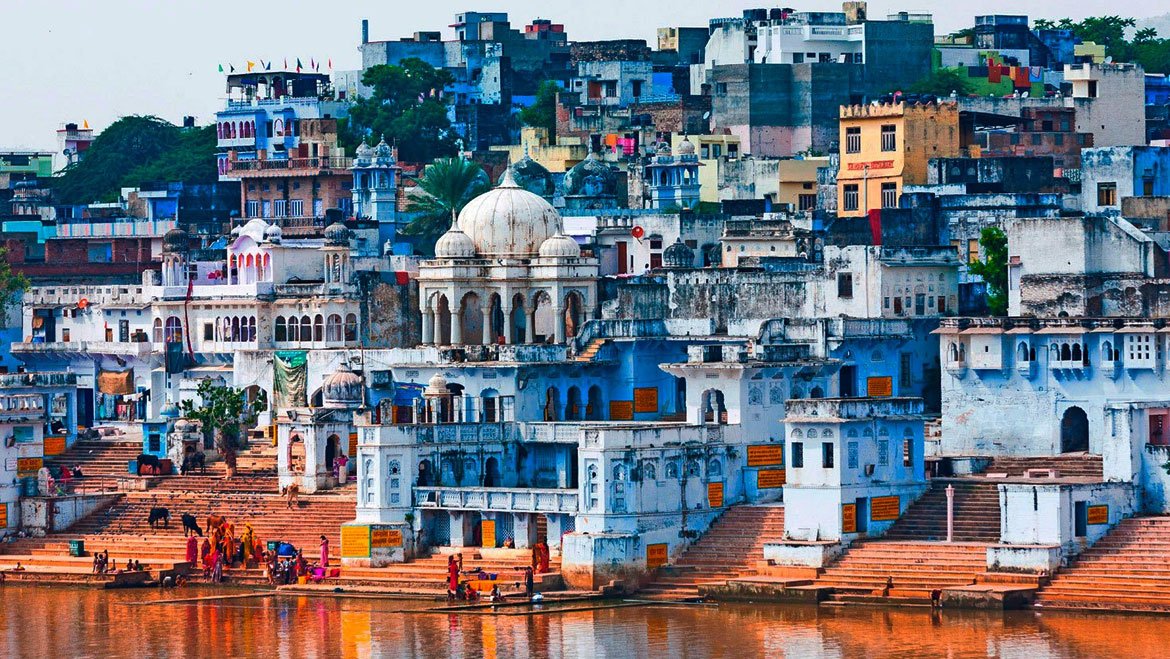
Check into your hotel by noon and rest before stepping out to explore Pushkar on foot. Visit the ancient Jagatpita Brahma Mandir, one of the very few temples in the world dedicated to Lord Brahma. From there, walk down to the 52 bathing ghats surrounding Pushkar Lake. Remember to remove your footwear before stepping onto the ghat marble and respect local photography guidelines. By 4:30 PM, take the ropeway up Ratnagiri Hill to Savitri Mata Temple for sunset views over the desert valley, returning to the main ghat in time for the evening Maha Aarti.
Day 4: Morning Bazaar Walk and Return Transfer
Wake early on your final morning to experience the peaceful lakeside atmosphere as temple bells ring across the water. Enjoy hot malpua and masala chai near the main market before browsing Pushkar Bazaar for silver jewelry, leather goods, and rose-water products made from locally grown Damask roses. After breakfast and hotel checkout, begin your comfortable three-hour return drive to Jaipur Airport or Jaipur Junction railway station for your onward journey.
Practical Travel Tips for First-Time Visitors
- Best Time to Visit: October through March offers pleasant daytime temperatures between 20°C and 28°C, making fort climbs and ghat walks comfortable.
- Dress Code and Etiquette: Wear modest clothing covering shoulders and knees when entering temples and shrines in Ajmer and Pushkar.
- Dietary Note: Pushkar is strictly a vegetarian and alcohol-free holy town, so plan your dining expectations accordingly.
- Smart Trip Planning: Travelers watching their expenses can explore customizable Rajasthan budget tour packages that bundle private AC vehicles, vetted heritage hotels, and licensed local guides at transparent rates.
With thoughtful pacing, local insights, and reliable transport from Rajasthan Yatra, this four-day itinerary lets you experience the architectural majesty of Jaipur and the spiritual warmth of Pushkar without feeling rushed.