Jaisalmer, a city that seems to rise like a mirage from the heart of the Thar Desert, is a place where history and geography converge in a golden embrace. Known globally as the “Golden City,” it is also frequently referred to as the “Sun City” due to the way the sunlight interacts with its unique yellow sandstone architecture. If you are planning a trip to the dunes, finding the right camp in Jaisalmer is the first step toward experiencing this solar brilliance firsthand. The city does not just sit under the sun; it reflects it, absorbs it, and celebrates it through every carved jali and towering bastion.
The Golden Architecture of the Thar
The primary reason Jaisalmer earned its solar moniker is the local yellow sandstone used in almost every structure. This stone possesses a peculiar quality: under the midday sun, it glows with a bright, honey-like hue, but as the sun begins to set, the entire city appears to be set ablaze with a deep, fiery gold. This architectural consistency creates a monochromatic landscape that feels both ancient and eternal. Unlike other cities where modern concrete has disrupted the skyline, Jaisalmer has preserved its aesthetic integrity, ensuring that every sunrise brings a renewed sense of wonder to those staying in a Jaisalmer tent camp. The fortress, the havelis, and even the humble dwellings in the narrow alleys contribute to this collective radiance.
Living History Within the Living Fort
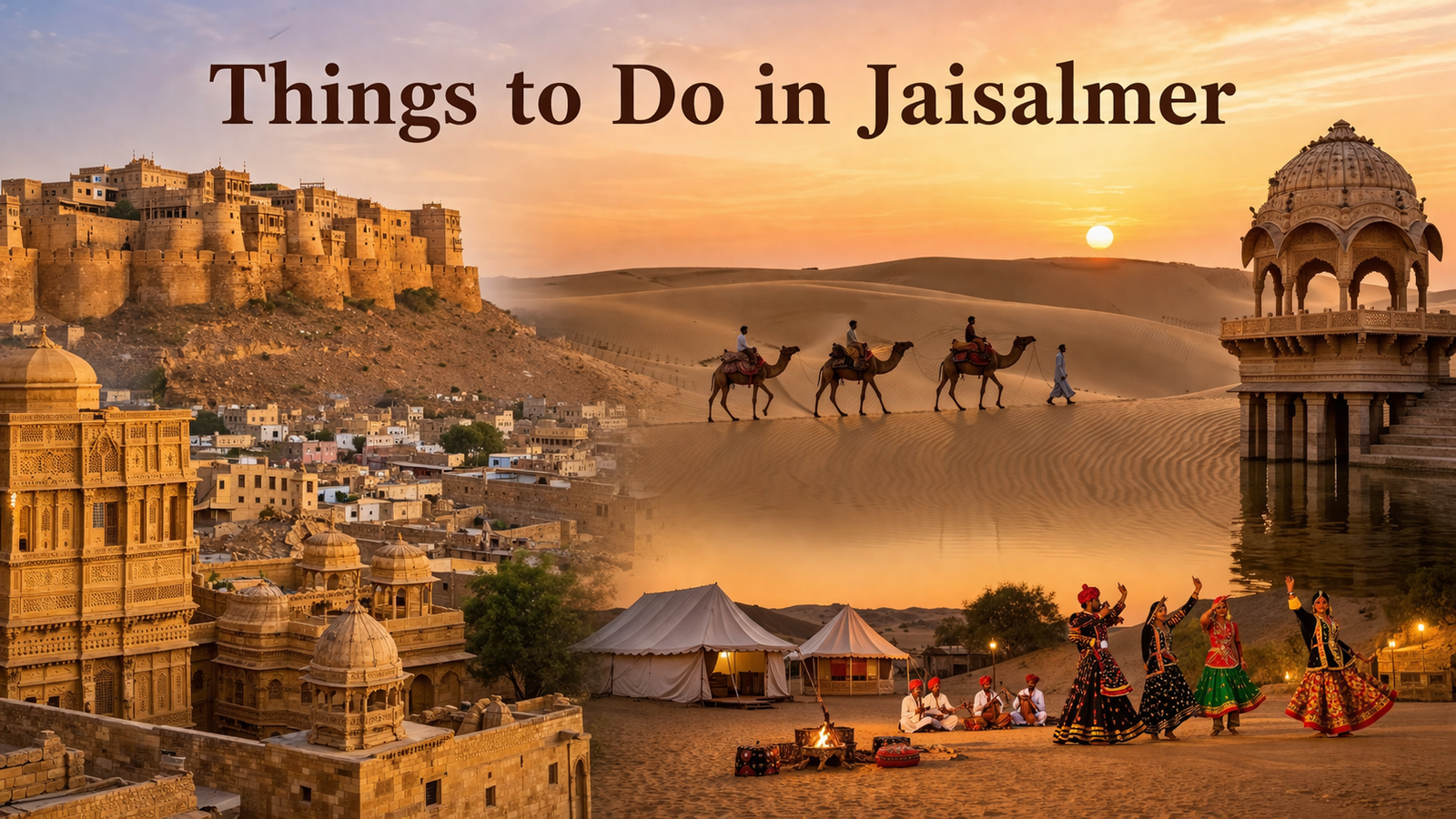
At the center of this sun-drenched landscape stands the Jaisalmer Fort, or Sonar Qila (the Golden Fort). Built in 1156 AD by Rawal Jaisal, it is one of the very few “living forts” left in the world. Thousands of people still reside within its walls, maintaining a lifestyle that has evolved over centuries while staying rooted in tradition. The fort’s massive yellow sandstone walls are a testament to Rajput ingenuity, designed to withstand the harsh desert climate while looking majestic against the sky. Walking through the fort’s four massive gateways—Akshay Pol, Suraj Pol, Ganesh Pol, and Hawa Pol—is like stepping back into a time when the sun dictated the pace of trade and life. The intricate carvings on the Jain Temples inside the fort showcase a level of craftsmanship that makes the stone look as delicate as lace.
The Mystique of Sam Sand Dunes
Beyond the city walls lies the true essence of the “Sun City”—the rolling dunes of Sam. Here, the sun is the undisputed protagonist of the landscape. The vast expanse of sand creates a playground of light and shadow that changes every hour. For travelers looking to maximize their time, researching places to visit in Jaisalmer in 3 days often leads them straight to these dunes for a sunset camel safari. Watching the sun dip below the horizon from the top of a dune is a spiritual experience for many. The sky transitions through shades of violet, orange, and crimson, while the sand cools rapidly, signaling the start of a desert night filled with folk music and campfire stories.
Intricate Havelis and Merchant Legacies
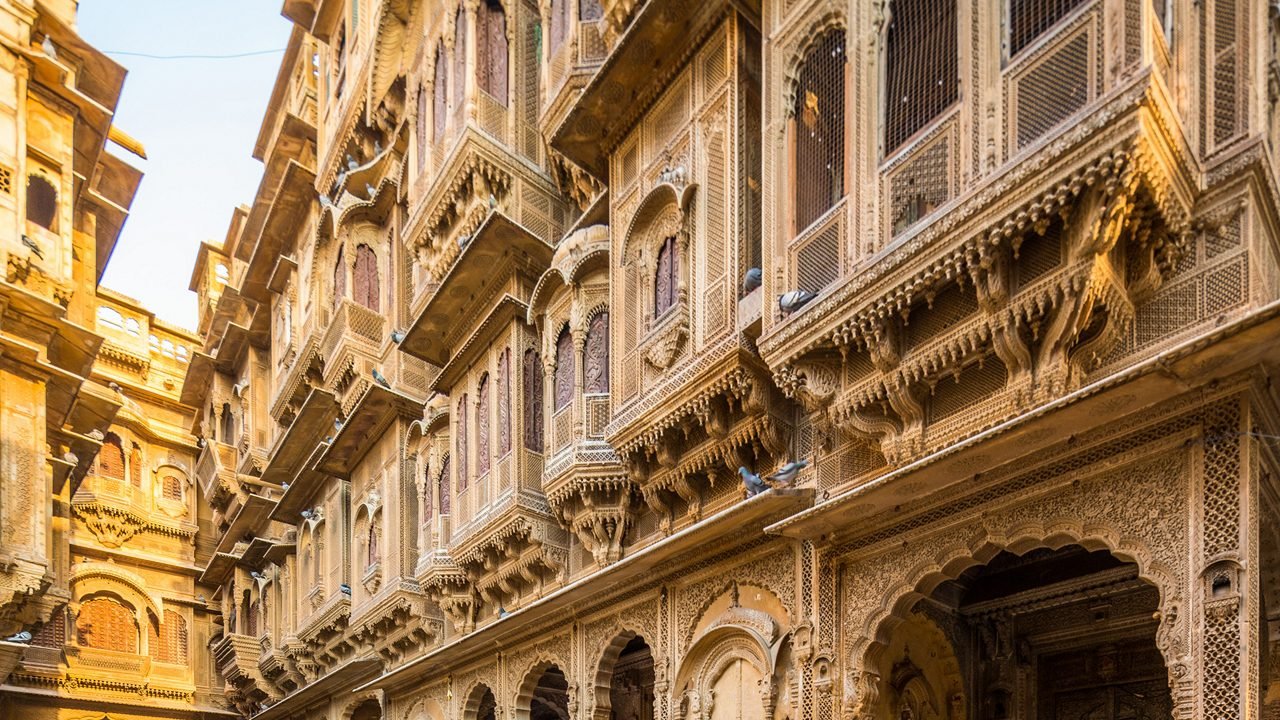
The wealth of Jaisalmer’s past is etched into the facades of its famous havelis. Patwon Ki Haveli, Salim Singh Ki Haveli, and Nathmal Ki Haveli are masterpieces of desert architecture. These were built by wealthy merchants who sought to display their prosperity through stone. The balconies (jharokhas) were designed not just for aesthetics but for practical ventilation, allowing the desert breeze to cool the interiors while shielding residents from the direct glare of the sun. The precision of the stone cutting is so high that many of these structures do not use mortar, relying instead on the perfect interlocking of sandstone blocks. When the sun hits these buildings at a 45-degree angle, the shadows highlight the depth of the carvings, revealing hidden details of flora, fauna, and geometric patterns.
Cultural Vibrancy and Desert Festivals
The Sun City is not just about stones and sand; it is about the people who have thrived in this arid environment for generations. The culture of Jaisalmer is as bright as the sun that shines over it. Traditional attire, featuring vibrant turbans and mirrored skirts, provides a sharp, beautiful contrast to the golden background of the city. During the Desert Festival, the city comes alive with puppet shows, camel races, and competitions like the “Mr. Desert” pageant. This celebration of life in a challenging landscape proves that the spirit of Jaisalmer is resilient and radiant. The local cuisine, featuring dishes like Ker Sangri and Gatte ki Sabzi, is specifically adapted to the desert, using ingredients that require little water but offer maximum nutrition and flavor.
Gadisar Lake: A Mirror to the Sky
Even in a desert city, water plays a crucial role in the narrative. Gadisar Lake, a man-made reservoir built in the 14th century, was once the only source of water for the entire city. Today, it serves as a peaceful retreat surrounded by small temples and shrines. The Tilon-ki-Pol, a beautifully carved gateway that spans the entrance to the lake, is a favorite spot for photographers. In the early morning, the lake acts as a mirror, reflecting the golden temples and the rising sun, creating a double image of the Sun City that is breathtakingly calm. It is a reminder that even in the harshest environments, the balance between the elements can create profound beauty.
The Modern Allure of the Golden City
Today, Jaisalmer continues to draw explorers from around the globe who seek to experience the “Sun City” for themselves. It offers a rare combination of adventure, luxury, and raw historical power. Whether you are exploring the abandoned, “haunted” village of Kuldhara or enjoying a traditional Rajasthani thali under the stars, the city leaves a lasting impression. The sun is more than just a weather condition here; it is the architect of the city’s identity, the driver of its tourism, and the soul of its golden glow. Visiting Jaisalmer is an invitation to slow down, respect the power of nature, and witness how a civilization can turn a challenging desert into a masterpiece of art and living history.