Planning a journey into the rugged dry deciduous forests of Ranthambore requires a careful understanding of weather conditions, seasonal wildlife behavior, and forest administrative schedules. Situated in the Sawai Madhopur district of southeastern Rajasthan, Ranthambore National Park represents one of the premier tiger reserves in northern India. Selecting the right travel window determines not only personal comfort during open-top game drives, but also the likelihood of observing elusive apex predators in their natural habitat. To help travelers optimize their wildlife expeditions, the operational months are analyzed below across climatic shifts, sighting patterns, and key logistical considerations.
Understanding the Operational Calendar of Ranthambore National Park
The regular tourism calendar operates primarily from October through June each year. During the annual monsoon interval between July 1 and September 30, the core administrative areas—specifically Zones 1 through 5—remain closed to vehicular traffic to allow terrain regeneration and animal breeding. While select buffer areas (Zones 6 through 10) may permit limited monsoon excursions, the primary wilderness circuits open fully on October 1. Visitors seeking comprehensive park access and traditional game drives should therefore concentrate reservations within the standard autumn-to-summer operational schedule.
Winter Season (October to February): Pleasant Climates and Verdant Landscapes
The winter months represent the most popular period for general wildlife tourism in Rajasthan. When the forest reopens in October, the terrain retains moisture from recent rains, presenting lush foliage, full water bodies, and dramatic scenic vistas against ancient heritage ruins.
- Weather and Comfort: Daytime temperatures hover comfortably between 20°C and 28°C. However, morning safaris in December and January experience significant chill, with dawn temperatures occasionally falling below 5°C to 10°C. Adequate layered clothing, windbreakers, and gloves are necessary for dawn departures in open vehicles.
- Biodiversity and Avian Life: Beyond large mammals, winter welcomes thousands of migratory birds to water points such as Padam Talao, Malik Talao, and Rajbagh. Species such as greylag geese, painted storks, and white-throated kingfishers congregate in great numbers.
- Sighting Dynamics: Because water is widely distributed across natural depressions and vegetation remains dense, big cats roam across expansive home ranges without relying on predictable focal points. Tracking relies heavily on territorial marking, auditory alarm calls of chital and sambar deer, and the experience of certified forest trackers.
Securing permits during this peak window necessitates planning up to 90 days in advance. Reserving accommodation at a well-situated luxury resort in Ranthambore allows travelers to combine rigorous, early-morning safari departures with dependable comfort, post-drive warmth, and personalized itinerary coordination.
Summer Season (March to June): High Visibility and Concentrated Tiger Activity
For dedicated wildlife photographers, naturalists, and experienced safari enthusiasts, the hotter months offer exceptional conditions for big cat tracking. As the seasonal heat intensifies, the visual character of the forest changes drastically.
- Foliage Reduction: Deciduous canopies shed their leaves, while understory grasslands wither under the dry sun. This broad reduction in ground cover dramatically improves lines of sight through ravines and valley floors.
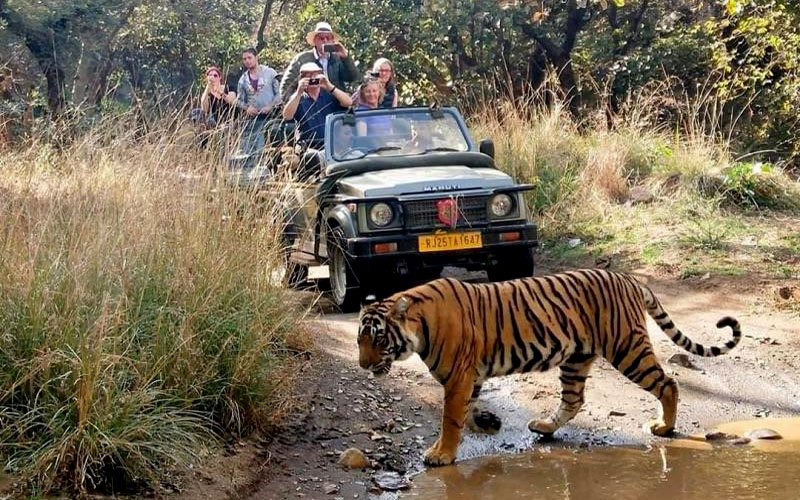
- Focalized Water Sources: Ephemeral streams and shallow ponds dry up entirely, leaving only perennial pools, lakes, and artificial waterholes managed by forest wardens. Royal Bengal tigers, leopards, and sloth bears must visit these specific hydration points multiple times daily. Cats frequently soak inside muddy water bodies during mid-day heat to regulate body temperature.
- Thermal Considerations: March features moderate conditions, but April, May, and June bring intense heat waves, with ambient temperatures reaching up to 45°C or higher. Light, breathable cotton garments, wide-brimmed hats, high-SPF sunscreen, and continuous electrolyte hydration are mandatory precautions during afternoon drives.
Vehicle Selection: Gypsy Versus Canter
Permit allocations govern vehicle types across morning and afternoon shifts. Travelers can choose between two primary options:
- Six-Seater Open Gypsy: An open four-wheel-drive vehicle offering high agility on steep ridgelines, quiet engine idling, and unobstructed angles for telephoto photography. Booking an exclusive jeep safari in Ranthambore provides optimal flexibility for dedicated naturalists who require focused guidance from the accompanying naturalist and driver.
- Twenty-Seater Canter: An elevated, open-top safari bus suitable for larger travel groups and budget-conscious itineraries. While canters offer an elevated vantage point across tall grass, their larger footprint prevents entry onto select steep tracks and narrow secondary turns.
Strategic Booking Recommendations
Given the strict carrying capacity guidelines established by the National Tiger Conservation Authority (NTCA), total vehicle entries per zone remain strictly capped. To ensure an optimal safari experience, adhere to these operational recommendations:
- Book Well Ahead: Reserve park permits through official channels at least 60 to 90 days before your intended travel date, particularly when aiming for weekend slots between November and March.
- Schedule Multiple Drives: Tiger sightings are governed by natural movement, ambient conditions, and terrain variables; they are never guaranteed on any single excursion. Booking three to four alternating morning and afternoon safaris across diverse zones significantly increases the probability of encountering diverse wildlife behaviors.
- Carry Correct Documentation: The original identity proof (passport for international visitors or Aadhaar/Voter ID for domestic travelers) used during the permit application process must match the traveler’s physical identification at the checkpoint gates.
Aligning your travel goals—whether focused on comfortable winter landscapes or high-probability summer tracking—with appropriate vehicle bookings ensures a safe, compliant, and deeply rewarding exploration of Ranthambore’s storied wilderness.