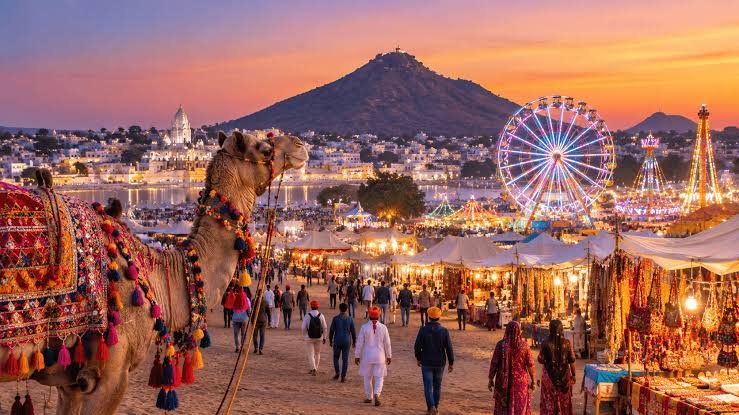
Every November during the Hindu lunar month of Kartik, the quiet temple town of Pushkar transforms into one of India’s most vibrant cultural and spiritual gatherings. Known locally as Kartik Mela or Pushkar ka Mela, the festival brings together thousands of camel herders, folk performers, artisans, and devotees from across northwestern India. Planning a well-paced itinerary around the event allows travelers to witness both the bustling livestock trade on the desert outskirts and the deeply devotional rituals along the sacred ghats. At Rajasthan Yatra, our on-ground travel specialists have spent years guiding guests through the narrow bazaar lanes and dusty fairgrounds, ensuring you experience the authentic rhythm of the festival without missing its most rewarding sights.
Dawn Walks Through the Camel Trading Grounds
The original heartbeat of the Pushkar Fair lies on the sandy dunes outside town, where nomadic herders from Marwar and Mewar gather to buy, sell, and showcase camels, horses, and cattle. Arriving on the fairgrounds between 6:30 AM and 8:30 AM offers the best opportunity to watch real negotiations unfold over cups of hot masala chai while the morning sun illuminates the desert mist. During the opening days of the festival, traders focus on livestock deals, while the middle days bring elaborate camel decoration contests, camel races, and spirited games of camel polo. Walking these grounds with an experienced tour operator in Rajasthan helps travelers navigate the vast encampments respectfully, understand regional livestock traditions, and know when to ask permission before photographing herders and their prized animals.
Hot Air Ballooning Over the Festival Landscape
For a panoramic perspective of the fairgrounds, desert dunes, and surrounding Aravalli hills, a sunrise hot air balloon flight is one of the most memorable Pushkar Fair activities. Flights typically launch around dawn when wind conditions are calmest, drifting gently above thousands of temporary tents, grazing camels, and the shimmering waters of Pushkar Lake. Because daily flight slots are strictly regulated by weather and local aviation permissions, booking well ahead of November is essential. Travelers seeking seamless arrangements, private desert camps, and curated aerial excursions often integrate these experiences into luxury Rajasthan tour packages to ensure every logistical detail is handled prior to arrival.
Sacred Ghat Walks and Temple Sightseeing
Beyond the livestock arena, Pushkar holds immense religious significance as one of India’s primary pilgrimage centers. Exploring the spiritual heart of town requires a slower, more observant pace.
- Pushkar Lake and the 52 Ghats: Surrounded by whitewashed steps and historic shrines, Pushkar Lake becomes the focal point of devotion during the final days of the fair, culminating on the full moon night of Kartik Purnima. At dusk, priests perform the evening Maha Aarti while thousands of floating oil lamps illuminate the water.
- Jagatpita Brahma Mandir: Located a short walk from the main ghats, this fourteenth-century shrine is among the very few temples in the world dedicated to Lord Brahma. Visitors should expect long queues during fair week and adhere to temple rules prohibiting leather goods, footwear, and cameras inside the sanctum.
- Savitri Mata Temple on Ratnagiri Hill: Reached either via a steep climb of roughly 200 stone steps or by a convenient passenger ropeway, this hilltop temple rewards visitors with sweeping views over the town, the lake, and the bustling mela grounds below.
Folk Competitions, Desert Safaris, and Bazaar Strolls
Afternoons and evenings at the stadium grounds showcase traditional Rajasthani heritage through lighthearted competitions and performing arts. Visitors can cheer on participants in the longest moustache competition, turban-tying challenges, and Matka Phod pot-breaking races, followed by nightly Kalbelia folk dances, puppet shows, and acoustic Manganiyar music. Outside the stadium, a late-afternoon camel cart or jeep safari into the nearby dunes provides a quiet contrast to the festival crowds. Returning to the main market street afterward allows time to browse silver jewelry, embroidered textiles, and handmade leather juttis while sampling local vegetarian specialties such as hot malpua, kachoris, and rose-infused sweets.
Practical Tips for Visiting Pushkar Fair
Because Pushkar is a sacred pilgrimage town, meat, eggs, and alcohol are strictly prohibited within municipal limits throughout the year. November mornings and evenings carry a brisk desert chill, so packing layered clothing and sturdy closed-toe walking shoes is advisable for dusty trails. Accommodation inside town sells out months in advance, making nearby Ajmer or heritage properties along the Jaipur highway practical bases. Many visitors combine two days at the fair with historic forts and royal palaces in Jaipur, Jodhpur, and Udaipur as part of a majestic Rajasthan getaway tour organized by Rajasthan Yatra, creating a balanced journey through the region’s living traditions.