Jodhpur rises abruptly from the edges of the Thar Desert, distinguished by its indigo-washed facades, towering defensive bastions, and centuries-old culinary heritage. Founded in 1459 by Rao Jodha, the leader of the Rathore clan, the city balances royal grandeur with the intimate rhythms of Marwar life. Navigating this historic terrain requires an organized approach to avoid afternoon heat and coordinate transport between hilltop fortresses and winding medieval alleys. For travelers planning a comprehensive journey through the Marwar region, partnering with an established travel agency in Rajasthan ensures smooth logistics, verified local drivers, and authentic historical context.
Morning Heritage Circuit: Royal Bastions and White Marble Memorials
The optimal starting point for any exploration of Jodhpur is Mehrangarh Fort. Perched on a 125-meter-tall perpendicular cliff, it remains one of India’s most formidable hill citadels. Arriving right when gates open at 9:00 AM avoids crowds and mid-day sun.
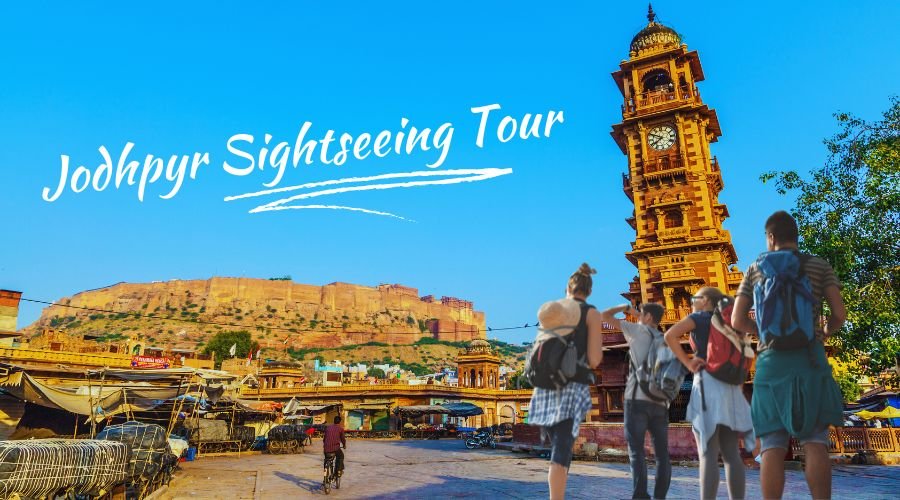
- Mehrangarh Fort: Visitors pass through seven grand entrance gates, including Jai Pol and Fateh Pol, bearing scars of historic artillery strikes. Inside, the fort houses curated palace galleries such as Phool Mahal (Palace of Flowers), Sheesh Mahal (Hall of Mirrors), and Moti Mahal (Pearl Palace). The museum displays royal palanquins, turbans, miniature paintings, and Marwar arms. Allow two to three hours to walk the extensive ramparts where original cannons face the sprawling blue residential quarters below.
- Jaswant Thada: Located approximately one kilometer north of Mehrangarh, this cenotaph was commissioned in 1899 by Maharaja Sardar Singh in memory of Maharaja Jaswant Singh II. Carved from sheets of Makrana marble, the stone surfaces are polished thin enough to transmit light during peak sun hours. The site features multi-tiered gardens, carved gazebos, and a calm lakeside setting that serves as an architectural transition between the fort and the vibrant valley floor.
Booking a structured Jodhpur full day tour provides an air-conditioned vehicle, dedicated parking assistance, and direct routing from these elevated monuments straight down to the heritage markets.
Mid-Day Urban Enclave: Mandore Gardens and Old Town Alleys
Moving outside the central walled city toward the ancient capital of Marwar provides deeper historical perspective. Mandore, situated roughly nine kilometers north, predates Jodhpur as the Rathore administrative seat.
- Mandore Gardens: Unlike the umbrella-shaped chhatris common elsewhere in Rajasthan, the royal cenotaphs here take the structural form of Hindu temples, built with deep red sandstone and rising four stories high with ornate spires. The grounds house the Hall of Heroes, dedicated to folk deities and regional warriors, along with shaded pathways populated by local langurs.
- Blue City Walking Route: Returning to the inner city through the Navchokiya and Brahmpuri quarters reveals why Jodhpur earned its moniker. Historically applied by Brahmins to indicate status and deflect desert heat, the copper-sulfate and limestone blue wash coats houses, external stairwells, and doorways. Walking these lanes on foot reveals painted murals, carved wooden doorways, and small community wells.
Afternoon Grandeur: Umaid Bhawan Palace
Transitioning from medieval architecture to early twentieth-century royal residence, Umaid Bhawan Palace sits on Chittar Hill, representing one of the world’s largest private homes.
- Architectural Legacy: Built between 1928 and 1943 under the supervision of British architect Henry Lanchester, the structure fuses Art Deco styles with classical Indian proportions. It was constructed primarily as a famine-relief public works project to employ local artisans and laborers during severe drought.
- The Museum Wing: While sections operate as the private residence of the current royal lineage and a luxury heritage hotel, the palace museum remains open to visitors. The exhibit houses an extensive collection of vintage European and Swiss clocks, royal family portraits, Art Deco furnishings, ceremonial dining sets, and a vintage automobile showroom featuring rare Rolls-Royces, Bentleys, and Cadillacs preserved in pristine running condition.
Sunset and Culinary Traditions: Toorji Ka Jhalra and Clock Tower
Ending the day around the historic Sardar Market offers an encounter with Jodhpur’s hydraulic engineering and regional street food.
- Toorji Ka Jhalra: Built in the 1740s by Queen consort Toorji, this stepwell showcases intricate water management designed to conserve seasonal rainfall. Submerged steps descend over two hundred feet, bordered by carved representations of dancing deities, elephants, and resting niches.
- Sardar Market: Dominated by the British-built Ghanta Ghar (Clock Tower), the bazaar is a center for red Mathania chillies, tie-dye bandhani textiles, hand-embroidered leather mojris, and antique brass ware.
- Local Culinary Stops: An authentic visit includes trying freshly fried mirchi vadas (spiced green peppers battered in gram flour) and mawa kachoris at local sweet shops around the plaza, followed by a glass of chilled, saffron-infused makhaniya lassi.
Practical Travel Tips for Jodhpur
- Ideal Visiting Window: The period from October through March offers pleasant daytime temperatures between 18°C and 28°C, making heritage walks and fort exploration comfortable.
- Footwear and Dress Codes: Most cenotaphs, religious shrines, and stepwells require footwear removal; wearing slip-on shoes with socks simplifies site entries. Modest clothing that covers shoulders and knees is recommended throughout the older residential quarters.
- Local Navigation: Streets within Navchokiya and Sardar Market are too narrow for standard cars; hiring licensed auto-rickshaws or walking remains the most efficient transit mode inside the walled boundary.