Rajasthan is often celebrated for its majestic palaces, historic forts, and vibrant desert folklore. Yet, the southern corridor of this royal state reveals a captivating geographic and ecological shift. Transitioning from the serene water bodies of Udaipur to the rugged granite wilderness of Jawai creates one of the most dynamic travel circuits in northern India. This curated guide outlines the route, highlights key sightseeing stops along the way, and showcases how to experience pristine natural heritage with authentic local expertise.
Exploring Udaipur: The City of Lakes
A journey through this region naturally begins in Udaipur, known worldwide as the City of Lakes. Framed by the ancient Aravalli Range, the city offers architectural grandeur intertwined with freshwater ecosystems.
- Lake Pichola: The undisputed heart of Udaipur’s historic quarters. A boat excursion across its waters reveals sweeping views of the City Palace complex, Jag Mandir, and the floating marble facade of Lake Palace. Early morning visits allow travelers to witness the ghats coming alive with daily rituals and soft morning light.
- Fateh Sagar Lake: Situated just north of Pichola, this second major lake offers a quieter, breezy promenade favored by locals. Nehru Park, an island garden in the center, and the Udaipur Solar Observatory both sit within its perimeter.
- Bagore Ki Haveli and Jagdish Temple: Beyond the water bodies, the surrounding heritage quarters showcase intricate Mewari stone carving, regional textiles, and centuries-old defensive architecture that set the stage for your journey into rural Rajasthan.
The Scenic Drive: Udaipur to Jawai via Ranakpur
The route from Udaipur to the Jawai wilderness spans approximately 130 to 150 kilometers, depending on your route, taking around 3 to 3.5 hours of driving time. Instead of rushing through the highway, traversing via the scenic mountain passes of the Aravallis provides access to profound cultural stops.
The most notable stop along this corridor is Ranakpur, home to the 15th-century Ranakpur Jain Temple complex. Dedicated to Tirthankara Rishabhanatha, the temple is renowned for its 1,444 uniquely carved marble pillars, where no two designs are identical. The surrounding dense forest within the valley also acts as a natural buffer zone, offering initial glimpses of regional birdlife and troop langurs before you enter the rocky plains of Pali district.
Entering Jawai: The Land of Granite and Big Cats
As the forested hills flatten out, the landscape shifts dramatically into the Jawai Bandh region. Dominated by billion-year-old volcanic granite boulders, scrubland, and the expansive catchment area of the Jawai Dam, this unique habitat supports one of the highest densities of wild leopards on the planet.
Unlike conventional national parks with rigid core and buffer zones, Jawai is an open pastoral landscape where wildlife thrives alongside the semi-nomadic Rabari community. This centuries-old coexistence between herders and apex predators represents one of the world’s most successful models of community-led conservation.
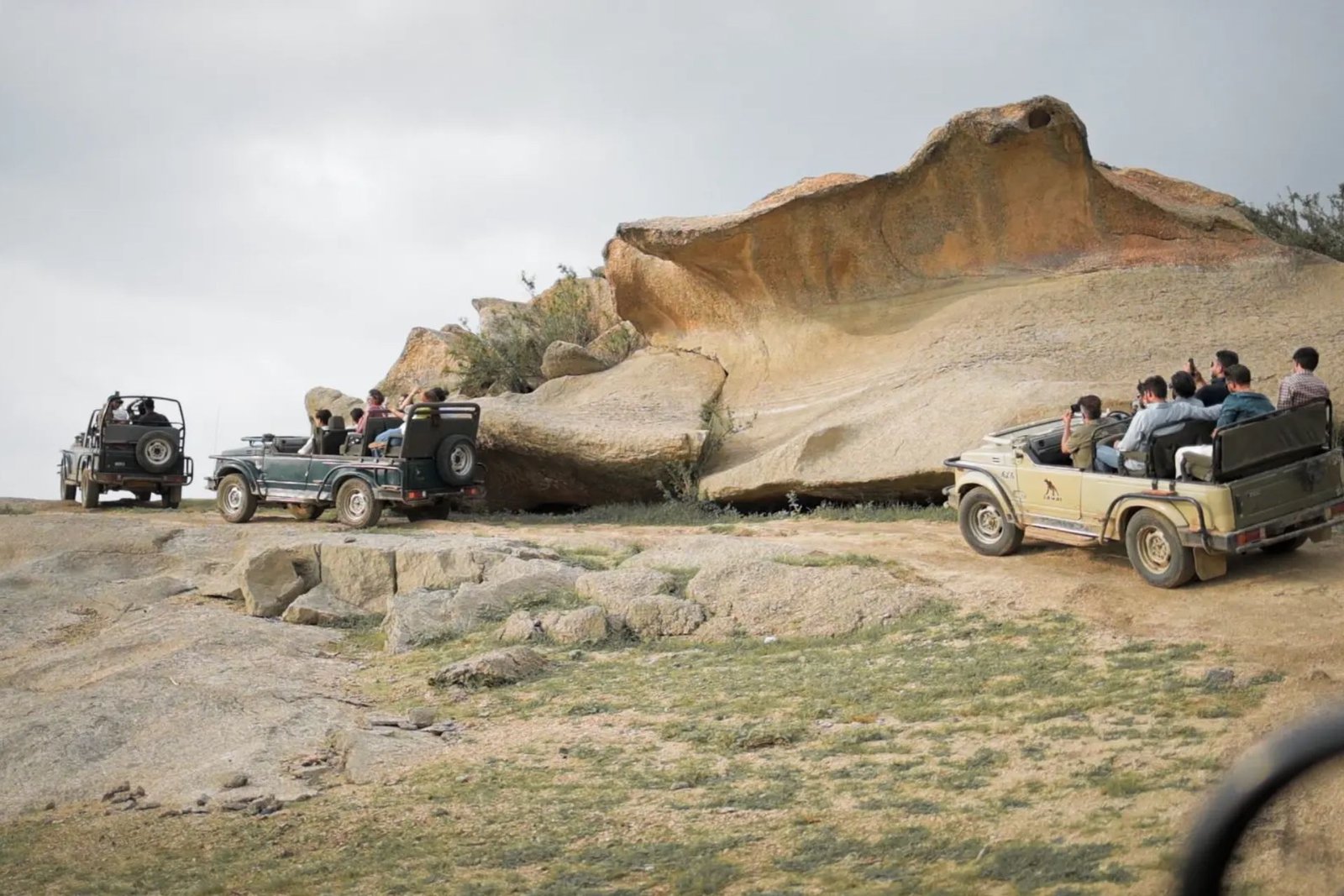
Setting out on a guided Jawai leopard safari across these private boulder terrains allows wildlife enthusiasts to track leopards in their natural setting without the enclosed boundaries of typical reserves. Specially customized 4×4 safari vehicles navigate steep granite inclines, where leopards can frequently be spotted basking on bare stone formations during early mornings and late afternoons.
Birdwatching and Wetland Sights around Jawai Dam
Beyond the big cats, Jawai is a critical wetland sanctuary. Jawai Dam, constructed across the Jawai River by Maharaja Umaid Singh of Jodhpur, is the largest dam in western Rajasthan.
During the winter and migratory months, the reservoir attracts thousands of migratory birds, including:
- Bar-headed geese arriving from Central Asia
- Greater flamingos feeding in the shallow waters
- Demoiselle cranes gathering in sprawling flocks along the sandbanks
- Marsh crocodiles sunning themselves on the rocky banks
Expert naturalists identify distinct raptors soaring above the cliffs, including crested serpent eagles, shikras, and migratory falcons, making the dam basin an essential visit for ornithologists and nature photographers.
Where to Stay: Heritage and Wilderness Comfort
Experiencing the raw serenity of Jawai requires an accommodation that respects the local ecosystem while delivering refined hospitality. Choosing a luxury resort in Jawai like The Jawai Sagar ensures an immersive stay where authentic Mewari and Marwari culinary traditions meet sustainable wilderness practices. Properties nestled close to the granite hills offer quiet vantage points, personalized safari planning led by local naturalists, and genuine cultural interactions with Rabari elders.
Best Time to Travel and Practical Travel Tips
Planning your itinerary requires consideration of Rajasthan’s seasonal shifts:
- October to March: Ideal temperatures for outdoor excursions, birdwatching, and morning safaris. Temperatures range from 12°C to 28°C.
- April to June: Warm summers bring sparse foliage, which often increases the predictability of leopard sightings around waterholes at dawn and dusk.
- What to Pack: Neutral-toned clothing (khakis, greens, and browns), polarized sunglasses, a high-zoom telephoto lens for photography, and warm layers for open-top morning safari drives.